What Are Generator Tanks?
A standby generator can start immediately when utility power fails, but it can only run as long as it has a dependable fuel supply. Generator tanks play a critical role in every emergency power system because they determine how long essential equipment can continue operating during an outage. For hospitals, data centers, municipalities, manufacturers, utilities, commercial facilities, and many other operations, that makes fuel storage just as important as the generator itself.
Choosing the right generator tanks involves much more than selecting the largest tank that fits on the property. Required runtime, fuel consumption, available space, local code requirements, weather conditions, fuel delivery access, maintenance, and long-term reliability all influence the best solution. A properly planned system helps ensure clean fuel is available when it is needed most while making inspections, refueling, and maintenance easier throughout the life of the installation.
Start With Runtime, Not Tank Size
One of the most common mistakes is selecting a tank based only on gallon capacity. Instead, the first question should be, “How long does the generator need to operate if utility power is unavailable?”
Every generator consumes fuel at a different rate depending on the electrical load. A generator operating at 30 percent capacity uses much less fuel than the same unit operating near full load. Because of that, nameplate generator size alone does not determine the correct tank capacity.
Start by reviewing the generator manufacturer’s fuel consumption data. Calculate the expected gallons per hour at the anticipated operating load, then multiply that number by the required runtime. A facility planning for 24 hours of backup power has very different fuel storage needs than one preparing for 48 or 72 hours of continuous operation.
For example, if a generator burns 18 gallons of diesel per hour under its expected load, it would require approximately 864 gallons of fuel for 48 hours of operation. However, that number is only the starting point. Usable fuel capacity may be lower than the tank’s nominal capacity because space must remain for normal operation, thermal expansion, and fuel system design.
It is also wise to include an operating reserve. The amount of reserve depends on several factors, including fuel delivery reliability, weather conditions, site accessibility, the importance of the facility, and how quickly additional fuel can reach the site during an extended outage. For critical facilities, planning for fuel deliveries during severe weather can be just as important as selecting the right tank size.
If you’re planning a new installation, our Generator Base Fuel Tank Buyer’s Guide and Choosing the Right Above Ground Fuel Storage Tank provide additional guidance on selecting fuel storage equipment for standby power applications.
Generator Tanks: Day Tanks and Remote Bulk Storage
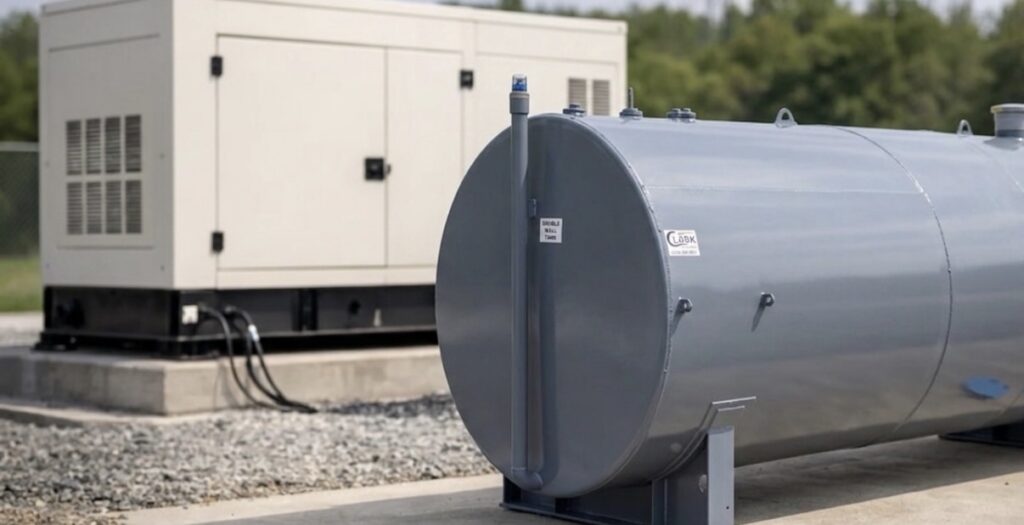
Many standby generator systems use either a generator day tank, a larger remote bulk storage tank, or a combination of both. Each configuration serves a different purpose, and the best choice depends on the generator, the required runtime, and the overall site layout.
A generator day tank is installed near the generator and provides a smaller fuel supply for the engine. In many systems, the day tank is automatically refilled from a larger remote bulk storage tank as fuel is consumed. This arrangement allows facilities to maintain extended runtime without placing a large storage tank directly beside the generator.
A remote bulk storage tank provides the primary fuel reserve for the system. Depending on the application, it may be a horizontal or vertical aboveground steel tank selected around the required fuel capacity, available space, delivery access, and local code requirements. While the storage tank is a major part of the system, transfer pumps, piping, controls, alarms, and return-fuel arrangements are equally important to reliable operation.
Select the Right Generator Tank for the Application
The best generator tanks are selected around the needs of the facility, not just the fuel capacity. Tank construction should reflect the fuel being stored, the location, environmental conditions, fire protection requirements, and the project’s specifications.
Many standby generator installations use a UL 142 above ground storage tank because it provides a dependable solution for aboveground diesel fuel storage. Depending on the site, either single-wall or double-wall construction may be appropriate. Our UL 142 Fuel Storage Tanks guide explains the differences in greater detail.
Some applications require additional fire protection because of nearby buildings, limited setbacks, insurance requirements, or local code interpretations. In those situations, a UL 2085 Fireguard® tank or STI Flameshield® tank may be a better fit. The right choice depends on the specific installation rather than a single rule that applies to every project.
Regardless of the tank selected, site conditions should always drive the final decision. Separation distances, available space, environmental considerations, and local permitting requirements all influence which design works best. Industry resources such as NFPA 30 and UL 142 Aboveground Flammable Liquid Tanks provide additional guidance for many aboveground fuel storage applications.
Plan for Code, Permitting, and Site Access
Installing generator tanks involves much more than selecting a listed fuel tank. Building codes, fire codes, environmental regulations, electrical requirements, insurance guidelines, and the authority having jurisdiction (AHJ) all play an important role in the final installation.
For that reason, it is always better to involve the project engineer, fire marshal, and tank manufacturer early in the planning process. Addressing these requirements before fabrication begins often prevents expensive changes after equipment has already been ordered or delivered.
Tank location deserves careful consideration as well. The fuel tank should provide safe separation from buildings, property lines, air intakes, ignition sources, and public traffic areas while still allowing convenient access for inspections and maintenance. Just as importantly, fuel delivery trucks must be able to safely reach the fill connection during both normal operation and emergency conditions.
The foundation should also be designed for the fully loaded weight of the tank while accounting for local soil conditions and drainage. Where vehicle traffic is present, bollards or other protective barriers help reduce the risk of accidental impacts. Good planning during the installation phase contributes to safer operation throughout the life of the system.
Keep Generator Fuel Ready for an Emergency
One of the biggest challenges with standby generators is that fuel often remains in storage for extended periods. Unlike fleet fueling systems that experience frequent fuel turnover, emergency generators may sit for weeks or even months without running under load.
Because of that, fuel quality becomes just as important as fuel quantity. Water intrusion, condensation, sediment, and microbial contamination can all affect diesel fuel over time. Unfortunately, these problems often remain unnoticed until the generator is needed during a power outage.
A good fuel management program begins with proper tank design. Drain connections, overfill protection, level monitoring, appropriate venting, and quality filtration all help protect stored fuel. Our Overfill Prevention for Fuel Tank Systems and Leak Detection for Fuel Tanks guides explain additional features that help improve the long-term reliability of aboveground fuel storage systems.
Specify the Details That Support Reliable Operation
The accessories installed on generator tanks should support dependable operation, not simply fill space on a specification sheet. Every component should have a purpose that helps keep the generator ready when utility power is unavailable.
Most generator fuel systems include a level gauge or electronic tank monitor so operators can quickly verify fuel inventory. Depending on the application, the system may also include high- and low-level alarms, overfill prevention equipment, lockable fill caps, emergency vents, normal vents, and remote monitoring. Choosing the right accessories during the planning stage is usually easier and less expensive than adding them after installation.
If the generator uses a remote bulk storage tank, transfer pumps and controls become especially important. They should be properly matched to the fuel type, required flow rate, piping arrangement, and generator manufacturer’s recommendations. Return fuel also deserves careful attention because some generator engines return more fuel than they actually consume. An improperly designed return system can create overheating, overflow, or fuel supply problems.
Accessibility is another detail that is often overlooked. Maintenance personnel should have clear access to gauges, valves, vents, drains, filters, and monitoring equipment. If routine inspections require climbing over piping or working in tight spaces, those inspections become more difficult and are less likely to be completed consistently.
Develop a Fuel Maintenance Plan
Owning reliable generator tanks requires more than filling them with diesel fuel and waiting for an emergency. Like any critical piece of equipment, the fuel system should be inspected and maintained on a regular schedule.
Periodic visual inspections help identify leaks, damaged coatings, loose fittings, water accumulation, corrosion, or other conditions before they become larger problems. Fuel levels should also be checked routinely so unexpected consumption or delivery issues do not leave the generator without adequate runtime during an outage.
Many facilities also include fuel sampling and periodic testing as part of their preventive maintenance program. This helps identify water contamination, sediment, and changes in fuel quality before they affect generator performance. Facilities that store diesel fuel for extended periods may also benefit from additional filtration or fuel polishing, depending on the application and maintenance program.
Our Tank Refurbishing Services article explains how routine inspections and maintenance help extend the service life of aboveground steel fuel tanks. Industry guidance such as the STI SP001 Standard also provides inspection recommendations for many aboveground storage tanks.
Prepare for Extended Power Outages
Extended outages create challenges that are easy to overlook during normal operations. Fuel deliveries may be delayed by severe weather, road closures, or widespread power outages. As a result, facilities should consider not only how long the generator can operate on a full tank but also how additional fuel will be delivered if the outage continues.
Planning ahead includes maintaining clear access for fuel delivery trucks, protecting the fill connection from obstructions, and allowing enough room for safe fuel transfers under emergency conditions. Operators should also know who will deliver fuel during an extended outage and whether priority fuel agreements are available for critical facilities.
Thinking through these situations before an emergency occurs helps ensure generator tanks continue supporting the facility when dependable backup power is needed most.
Buy Generator Tanks for Long-Term Reliability
The lowest purchase price does not always provide the lowest long-term operating cost. The best generator tanks are the ones that fit the facility, support dependable fuel deliveries, simplify maintenance, and provide reliable fuel storage throughout the life of the generator.
Custom features are often worthwhile when they solve a specific operational challenge. Depending on the application, that may include custom dimensions, skid-mounted designs, specialty coatings, additional fittings, larger inspection openings, lockable equipment, or accessory packages designed around the site’s maintenance and operating requirements.
Before requesting a quote, gather as much information as possible about the project. The generator model, fuel type, desired runtime, expected fuel consumption, site layout, delivery access, electrical requirements, and applicable project specifications all help determine the best solution. The more complete the information, the easier it is to recommend generator tanks that meet both the operational and regulatory requirements of the project.
Work With a Manufacturer That Understands Generator Fuel Storage
Generator fuel storage is different from fleet fueling or everyday equipment fueling. In many facilities, the tank may sit for long periods before it is called upon during an emergency. That means reliability, fuel quality, accessibility, and proper planning are just as important as storage capacity.
An experienced manufacturer should ask questions about runtime expectations, generator size, site conditions, maintenance practices, fuel deliveries, and local code requirements before recommending a tank. Those conversations often identify opportunities to improve long-term reliability while avoiding unnecessary costs or installation challenges.
At Clark Welding Tanks, we’ve been building American-made aboveground steel storage tanks since 1991. We work with hospitals, municipalities, manufacturers, utilities, commercial facilities, contractors, and many other industries to provide dependable fuel storage solutions designed around each customer’s application.
Choosing the Right Generator Tanks
The best generator tanks are designed around the facility they support. Runtime requirements, fuel quality, maintenance, delivery access, site conditions, and future service all contribute to a dependable emergency power system.
Taking time to plan these details before construction begins helps reduce installation delays, simplify maintenance, and improve long-term reliability. Just as importantly, it helps ensure the generator has clean, dependable fuel available when utility power is unavailable.
Whether your project requires a single aboveground storage tank or a larger fuel storage system designed for extended runtime, careful planning today helps prevent unexpected problems during tomorrow’s emergency.
If you’re planning a standby generator installation, contact Clark Welding Tanks or request a fuel storage tank quote. Our team can help you select generator tanks that match your runtime requirements, site conditions, and long-term operating goals.