When Do Tank Refurbishing Services Make Sense?
A steel storage tank can continue serving your operation for many years, but age alone doesn’t determine whether it should be repaired or replaced. The real question is whether the tank remains structurally sound and whether refurbishing will provide safe, dependable service for years to come.
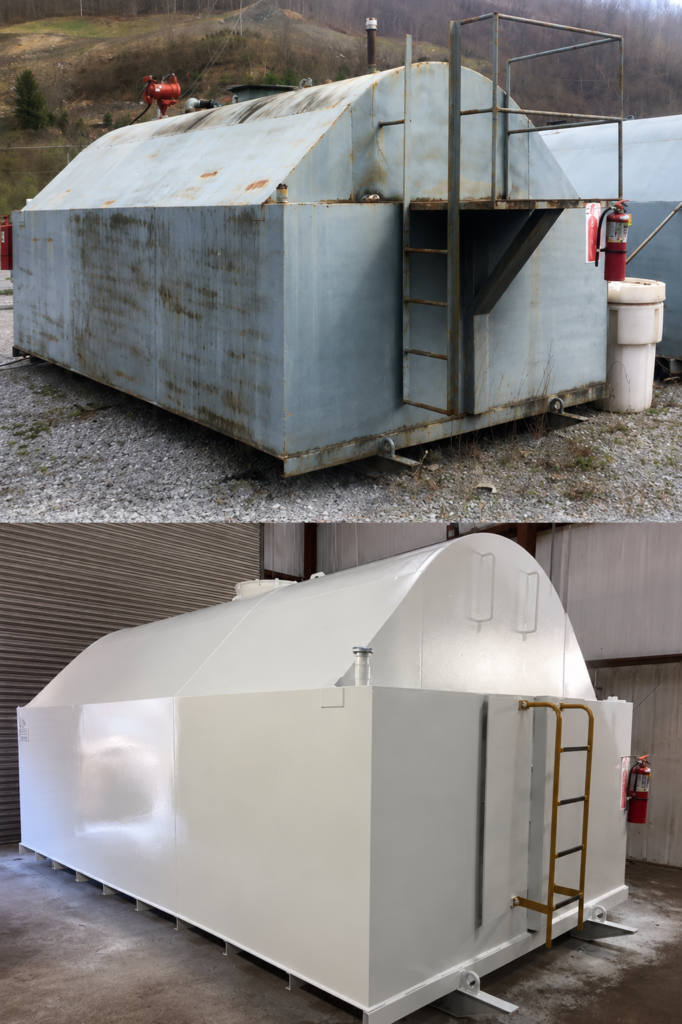
Tank refurbishing services help restore existing above ground storage tanks by repairing worn components, addressing corrosion, applying protective coatings, replacing accessories, and improving overall reliability. In many cases, refurbishing can extend the service life of a well-built steel tank while delaying the cost of replacement. In other situations, replacing the tank is the safer and more economical long-term decision.
For facility managers, fleet operators, municipalities, farms, contractors, and industrial facilities, the answer comes down to facts, not assumptions. The condition of the steel, the product being stored, the intended application, site conditions, applicable regulations, and the cost of future maintenance should all be evaluated before deciding on a repair plan.
What Tank Refurbishing Services Include
No two refurbishing projects are exactly alike. The work should always be based on the condition of the tank and the owner’s goals.
Depending on the condition of the tank, tank refurbishing services may include:
- Surface preparation and sandblasting
- Interior or exterior protective coatings
- Weld repairs
- Minor steel repairs
- Replacing damaged fittings
- New vents and emergency vents
- New gauges and level indicators
- New valves and piping connections
- Pump, meter, filter, and dispensing equipment upgrades
- Leak testing
- Secondary containment repairs
- Painting and corrosion protection
Many projects involve much more than simply repainting the outside of the tank. Corrosion often develops around saddles, legs, weld seams, nozzles, manways, and other areas where moisture can collect. Interior corrosion, water contamination, sludge buildup, and deteriorated fittings may also require attention before the tank can safely return to service.
Because every application is different, the stored product also plays an important role. Diesel fuel, gasoline, heating oil, waste oil, DEF, water, and many industrial liquids each have different compatibility requirements. Those differences affect everything from coating selection to replacement components and accessories.
A well-planned refurbishing project should clearly identify what will be repaired, what will be replaced, how the work will be tested, and whether any upgrades should be completed while the tank is out of service.
Evaluating the Condition of Your Tank
Before any repair work begins, the first step is determining whether the tank is a good candidate for refurbishing.
A thorough evaluation helps identify structural concerns before time and money are invested in repairs. It also helps owners understand the remaining service life of the tank and whether refurbishing or replacement will provide the better long-term value.
When evaluating an existing steel storage tank, contractors typically consider:
- The condition of the shell, roof, and floor
- Weld integrity
- Corrosion and metal loss
- Tank supports and foundations
- Fittings, vents, valves, and piping
- Evidence of leaks or previous repairs
- Interior condition, when access is available
- The overall condition of connected equipment
Additional evaluation may include ultrasonic thickness testing, leak testing, coating assessment, and examining interior surfaces after the tank has been safely emptied and prepared.
Understanding the tank’s overall condition helps owners decide whether refurbishing is a worthwhile investment or whether replacement will provide better long-term value.
When Tank Refurbishing Is a Smart Investment
Tank refurbishing often makes sense when the steel remains structurally sound and the repairs can restore dependable service without compromising long-term reliability.
Many older steel tanks were built to last for decades. If corrosion is limited, welds remain in good condition, and the tank is still well suited for its application, refurbishing can be a cost-effective way to extend its service life while avoiding the expense of immediate replacement.
Tank refurbishing is often a good option when:
- Surface corrosion is limited
- The shell and floor remain structurally sound
- Welds are in good condition or require only minor repair
- The tank size still meets operational needs
- Existing foundations and piping remain serviceable
- Replacing the tank would create unnecessary downtime
- New accessories can improve the performance of the existing system
Protective coatings are one of the most common tank refurbishing projects. When applied over properly prepared steel, modern coating systems help protect the tank from moisture, weather, and corrosion. However, coatings are designed to protect sound steel. They cannot restore steel with severe metal loss or repair structural damage.
Many owners also use scheduled downtime as an opportunity to improve the entire storage system. Replacing worn pumps, filters, meters, hoses, nozzles, vents, valves, gauges, and overfill equipment can improve reliability while reducing future maintenance.
Addressing minor coating failures and replacing aging components before they become major problems often saves both time and money. Planned refurbishing also helps reduce unexpected downtime and allows maintenance to be completed on your schedule instead of during an emergency.
When Replacement Is the Better Choice
Not every tank is a good candidate for refurbishing.
If the evaluation reveals extensive corrosion, significant metal loss, recurring leaks, damaged supports, major structural weld repairs, or years of deferred maintenance, replacement may provide a safer and more economical long-term solution.
Replacement should also be considered when the existing tank no longer meets the facility’s needs. Many installations were designed years ago, and operating requirements often change over time. Increased fuel usage, larger fleets, updated environmental requirements, new dispensing equipment, or changes in site layout may justify installing a different tank rather than investing in extensive repairs.
In some cases, replacing an older tank can also improve fuel management, simplify maintenance, increase storage capacity, or add features that weren’t available when the original tank was installed.
Depending on the application, a replacement project may include a UL 142 above ground storage tank, an STI Flameshield® tank, or a UL 2085 Fireguard® tank.
The decision should never be based on repair cost alone.
Consider the complete picture, including:
- Expected remaining service life
- Future maintenance costs
- Operational downtime
- Environmental exposure
- Insurance requirements
- Reliability
- Long-term operating costs
Sometimes tank refurbishing provides many additional years of dependable service. Other times, replacing the tank reduces maintenance costs and provides greater confidence for years to come. The goal is to make the decision based on facts instead of simply choosing the lowest upfront cost.
Planning a Successful Tank Refurbishing Project
The most successful tank refurbishing projects begin with a clear understanding of the tank’s condition and the owner’s long-term goals.
Some owners simply want to extend the life of an existing tank with new coatings and minor repairs. Others take the opportunity to modernize the entire storage system by replacing aging accessories, improving dispensing equipment, or addressing years of normal wear.
Planning ahead also helps reduce downtime. Ordering replacement parts in advance, scheduling the work around normal operations, and completing multiple upgrades during the same outage often saves both time and money.
Tank refurbishing projects commonly include upgrades such as:
- New pumps and meters
- New vents and gauges
- Replacement valves and fittings
- New filters and dispensing equipment
- Interior or exterior protective coatings
- Corrosion repair and repainting
- Piping repairs or modifications
- Secondary containment improvements
Completing these improvements during one scheduled project is often more efficient than making repeated repairs over several months or years. It can also improve the overall appearance, reliability, and performance of the storage system.
Choosing the Right Tank Refurbishing Partner
Experience matters when evaluating an existing steel storage tank.
A qualified contractor should take time to understand how the tank is used, what product it stores, how long it has been in service, and what the owner expects from the completed project. Every tank has a different history, and every facility has different operating requirements.
At Clark Welding Tanks, we reference industry guidance such as Steel Tank Institute SP031 when performing tank refurbishing work on shop-fabricated steel storage tanks. Following recognized industry practices helps us complete repairs using established procedures while evaluating each project based on the tank’s condition and intended service.
A good proposal should clearly explain:
- What repairs are recommended
- Which components should be replaced
- What optional upgrades are available
- The expected project timeline
- Whether tank refurbishing is the best long-term solution
Sometimes the recommendation will be to refurbish the existing tank. Other times, replacement simply provides better long-term value. The right contractor will explain both options honestly, answer your questions, and help you make an informed decision based on the condition of the tank and your operational goals.
Choosing a company with experience in both tank refurbishing and new tank manufacturing can also provide a broader perspective. Rather than recommending the same solution for every project, an experienced provider can help you compare your options and determine which approach makes the most sense for your facility.
Making the Right Long-Term Decision
Sooner or later, every steel storage tank reaches a point where owners need to decide whether tank refurbishing or replacement makes the most sense.
There is no single answer that fits every situation. A well-built steel tank that has been properly maintained may provide many additional years of reliable service after refurbishing. On the other hand, a tank with extensive corrosion, recurring maintenance issues, or changing operational needs may be better replaced with a new storage system.
The best decision comes from looking at the complete picture, including:
- The condition of the tank
- Expected remaining service life
- Current and future maintenance costs
- Operational downtime
- Product compatibility
- Changes in storage capacity or fuel demand
- Long-term reliability
Taking the time to evaluate these factors often leads to a better investment than focusing only on the initial repair estimate.
Clark Welding Tanks Can Help
At Clark Welding Tanks, we believe every customer deserves the solution that makes the most sense for their operation.
Some customers benefit from tank refurbishing services that extend the life of an existing steel storage tank. Others find that replacing the tank provides better long-term value. Our job is to help you understand both options so you can make an informed decision.
If replacement is the right choice, we manufacture UL 142 above ground storage tanks, STI Flameshield® tanks, and UL 2085 Fireguard® tanks for commercial, industrial, agricultural, and municipal applications. We can also help you choose the capacity, construction, containment, and accessories that best fit your project.
Whether you’re evaluating an existing storage tank or planning a completely new installation, our team is here to answer your questions and help you choose the solution that provides the best long-term value.
If you’re ready to discuss your project, contact Clark Welding Tanks or request a fuel storage tank quote today.