Steel vs. Plastic: Choosing the Right Above Ground Storage Tank
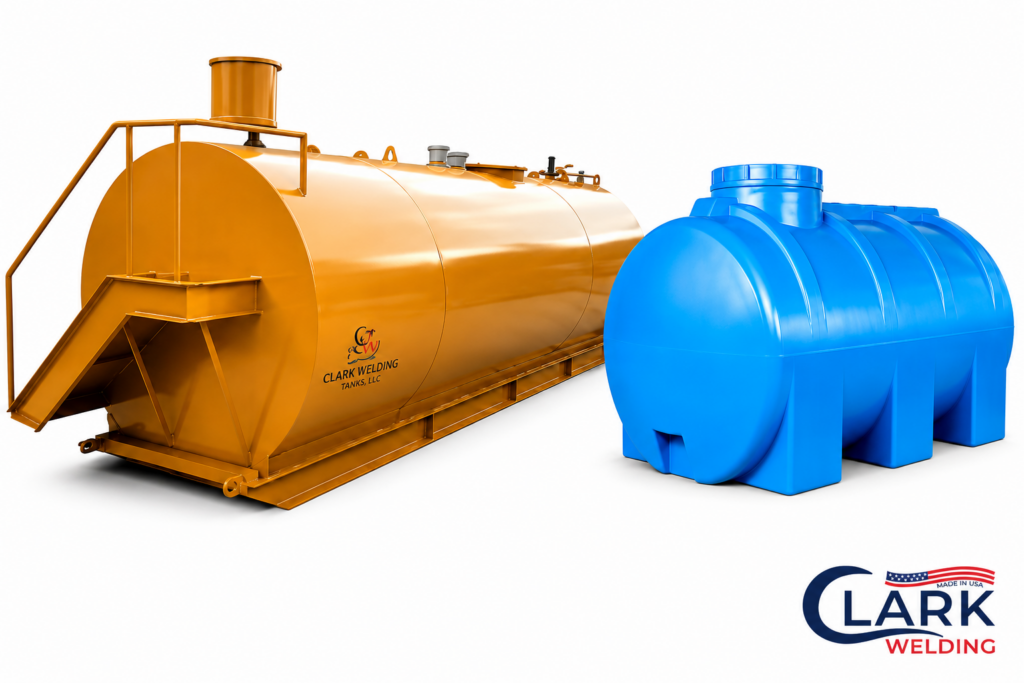
Choosing between a steel above ground storage tank and a plastic storage tank depends on what you plan to store, where you will install the tank, and how long you expect it to remain in service. Both materials have advantages, but each performs best in different applications.
If you store diesel fuel, gasoline, heating oil, or other combustible liquids, a UL 142 above ground storage tank provides outstanding strength, long service life, and compliance with recognized industry standards. Plastic tanks remain an excellent choice for many water storage and compatible non-flammable chemical applications.
Steel vs. Plastic at a Glance
- Steel tanks offer exceptional strength and impact resistance.
- Plastic tanks are lightweight and easier to transport and install.
- Steel tanks are commonly used for commercial and industrial fuel storage.
- Plastic tanks are often selected for water, fertilizer, and compatible chemical storage.
- The best choice depends on the product being stored, local code requirements, environmental conditions, and your long-term needs.
Strength and Durability
Steel tanks handle demanding environments with ease. Contractors, municipalities, manufacturers, farms, and fleet operators rely on steel because it stands up to years of heavy use.
Steel also performs well during severe weather, including high winds, heavy snow, and storms. Unlike plastic, steel resists damage from rodents, wildlife, and accidental impacts from equipment or vehicles.
If your project requires additional fire protection, Fireguard® tanks provide a level of fire resistance that plastic tanks cannot offer. Many facilities that need additional protection without moving to a protected tank also choose an STI Flameshield® tank.
Corrosion and UV Exposure
Many buyers worry that steel tanks will rust over time. Fortunately, proper maintenance and today's coating systems greatly reduce that risk.
Manufacturers apply durable exterior paint systems and specialized interior linings that protect steel tanks and allow them to safely store a wide variety of products. In many applications, these coatings eliminate the need for more expensive stainless steel construction.
Plastic tanks resist rust, making them a practical choice for many applications. However, prolonged exposure to ultraviolet (UV) sunlight gradually weakens many plastics. As the material ages, it may become brittle, increasing the risk of cracks, leaks, or deformation in demanding outdoor environments.
Installation and Transportation
Plastic tanks weigh much less than steel tanks. Their lighter construction makes transportation and installation easier, especially where lifting equipment is limited.
Steel tanks require cranes or forklifts during installation because of their weight. Fortunately, modern transportation and lifting equipment have made steel tank installation faster and more affordable than ever before.
Cost Considerations
Plastic tanks usually cost less upfront, making them attractive for projects with a limited budget.
Steel tanks typically require a larger initial investment. They often provide greater long-term value because they last longer and can frequently be repaired instead of replaced. Depending on the application, replacing several plastic tanks throughout their service life may ultimately cost more than purchasing one quality steel tank.
Instead of comparing only the purchase price, compare the total cost of ownership over the life of the tank.
Which Tank Is Best?
There is no single answer for every application.
Choose a plastic tank when you need to store water or compatible non-flammable chemicals and want lower upfront costs with easier installation.
Most commercial facilities choose steel tanks for petroleum products because they offer greater durability, better security, longer service life, and available fire protection. Depending on your project, a UL 142 tank, Flameshield® tank, or UL 2085 Fireguard® tank may provide the best solution.
Regulations and Standards
Always select a fuel storage tank that meets the codes and regulations for your application. Requirements vary based on the product being stored, the tank size, the installation location, and local building or fire codes.
Helpful resources include:
Final Thoughts
Both steel and plastic storage tanks serve important purposes. Start by identifying your application, the liquid you plan to store, and the regulations that apply to your site.
If your project involves storing fuel or requires a durable above ground storage solution for commercial or industrial use, a properly designed steel tank can provide decades of dependable service when maintained correctly.
Consider the liquid you will store, your site conditions, local regulations, and long-term ownership costs before making your final decision.
If you're unsure which tank is right for your project, Contact Clark Welding Tanks. Our experienced team can help you determine whether a UL 142 above ground storage tank, STI Flameshield® tank, or UL 2085 Fireguard® tank best fits your application.