A Farm Diesel Fuel Tank Should Keep Your Operation Moving
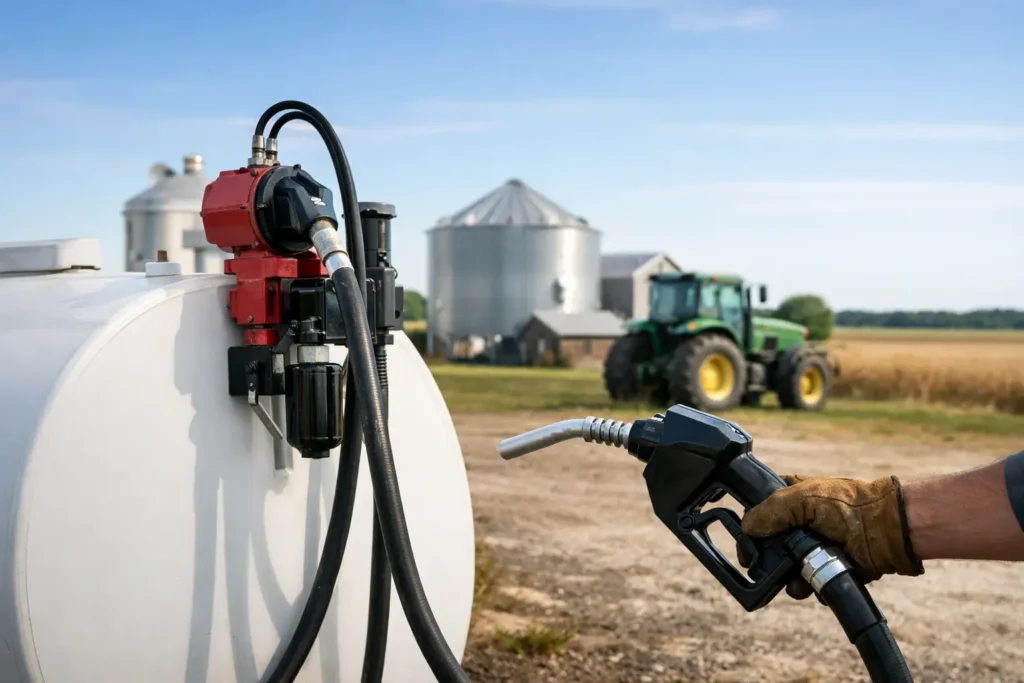
A farm diesel fuel tank does much more than store fuel between deliveries. It helps keep tractors, combines, irrigation engines, generators, skid steers, service trucks, and other equipment running when work needs to get done. During planting and harvest, losing time because of a fuel problem can quickly turn into lost productivity.
The right fuel system starts with how your farm operates. Think about how much fuel you use, how often your supplier delivers, where the tank will sit, and who will use it every day. A well-planned system protects your fuel, speeds up daily fueling, and makes routine maintenance much easier.
If you’re comparing different tank options, our guide on Choosing the right above ground fuel storage tank explains the factors that influence long-term performance.
Start With Your Actual Fuel Demand
Tank size should match the way your farm uses fuel, not what another operation happens to own. Every farm is different. A row crop operation, dairy farm, cattle ranch, or orchard may all have very different fueling needs, even if they farm a similar number of acres.
Instead of looking only at annual fuel purchases, focus on your busiest time of year. Planting season, harvest, irrigation, or extended generator use often places the highest demand on your fuel system. Those peak periods usually provide the best picture of how much storage you really need.
Start by estimating how many gallons you typically use between fuel deliveries. Then add enough reserve capacity to handle weather delays, supplier scheduling changes, or several pieces of equipment needing fuel on the same day. That reserve can help keep work moving even when deliveries don’t arrive exactly as planned.
At the same time, bigger is not always better. Extra storage means more money tied up in fuel inventory, and diesel that sits too long may require additional fuel management. The goal is to balance dependable fuel availability with efficient inventory turnover.
Delivery schedules also matter. Some fuel suppliers prefer larger deliveries or have minimum delivery quantities. Choosing a tank that fits your supplier’s delivery schedule can reduce transportation costs and simplify purchasing. Other farms may benefit from a smaller tank if dependable local deliveries are readily available.
Plan for Growth
Most farms change over time. You may add larger tractors, another combine, more irrigation pumps, service trucks, or backup generators. Fuel demand can increase much faster than expected.
Planning for moderate growth when you purchase your tank often costs far less than replacing the entire system a few years later. Leaving room for future expansion can also simplify site planning if you eventually decide to add another dispenser or additional storage.
Fuel quality deserves just as much attention as capacity. Diesel naturally collects moisture over time, and water creates opportunities for contamination and microbial growth. A quality fuel system should make inspections, water removal, and filter maintenance straightforward instead of difficult.
Features such as low-point drains, quality filtration, and routine maintenance help protect expensive diesel engines and reduce unexpected repair costs.
Choose the Right Tank Construction
Aboveground steel tanks remain one of the most popular choices for farms because they provide long service life, easy inspection access, and dependable performance in demanding environments. They also come in a variety of sizes and configurations that fit everything from small family farms to large commercial operations.
Many agricultural customers choose a UL 142 above ground storage tank because it is specifically designed for aboveground flammable and combustible liquid storage. These tanks provide a proven solution for many diesel storage applications.
Some projects require additional fire protection. In those situations, a UL 2085 Fireguard® tank may better match the project’s fire code requirements, insurance requirements, or site conditions.
The right choice depends on several factors, including:
- Fuel capacity
- Tank location
- Local regulations
- Insurance requirements
- Environmental considerations
- Future operating plans
Instead of choosing a tank based only on price, look at how the complete fuel system will serve your operation over many years. A tank that fits today’s needs while allowing room for future growth often delivers the best long-term value.
Single-Wall or Double-Wall?
One of the biggest decisions is whether a single-wall or double-wall tank makes the most sense for your farm.
A single-wall tank may work well when your site includes an approved secondary containment system, such as a containment dike or another engineered solution. This approach can lower the initial tank cost, but it also means you’ll need to build, inspect, and maintain the containment area throughout the life of the system.
A double-wall tank places a second steel wall around the primary tank to provide built-in secondary containment. Many farms prefer this design because it reduces the amount of site work and helps keep the fueling area cleaner and more organized.
Some operations also choose self-contained above ground storage tanks. These systems combine fuel storage and containment into one package, making installation simpler on many sites while adding another layer of spill protection.
No single design works best for every farm. Consider questions like:
- Is the site level or sloped?
- Is the tank close to a creek, pond, drainage ditch, or well?
- Will heavy equipment operate nearby?
- How much room do you have for installation?
- What do local codes and your insurance company require?
Thinking through these questions before purchasing can save time, money, and frustration later.
Build the Complete Fueling System
The tank is only one part of the project. The equipment attached to it determines how easy the system is to use every day.
A small transfer pump may work well for fueling a compact tractor once a week. It probably won’t keep up if several large tractors, combines, or trucks need fuel during a busy harvest day. Slow fueling wastes valuable time when every hour counts.
A complete farm fueling system often includes:
- Transfer pump
- Fuel hose
- Automatic shutoff nozzle
- Fuel meter
- Fuel filtration
- Tank vent
- Overfill prevention equipment
- Tank level gauge
Many farms also benefit from fuel management systems that track who dispensed fuel and how much each machine used. That information helps monitor fuel costs, schedule deliveries, and identify unusual fuel consumption before it becomes a larger problem.
Don’t Overlook Fuel Filtration
Modern diesel engines use high-pressure fuel systems with tight tolerances. Dirt and water that might have gone unnoticed years ago can now lead to expensive injector or fuel pump repairs.
Good filtration protects both your equipment and your investment in fuel.
Water can enter a tank through normal condensation, fuel deliveries, or damaged equipment. Dirt may enter during fueling or maintenance. Installing quality filters and replacing them on schedule helps keep contaminants away from your equipment.
Regular inspections are just as important. Check for water, inspect filters, and keep fill caps, vents, and fittings in good condition. A few minutes of maintenance can prevent hours of downtime during your busiest season.
Monitor Fuel Levels Before You Run Low
Knowing how much fuel remains in the tank makes purchasing much easier.
Mechanical gauges provide a simple visual reading that works well for many farms. Larger operations or farms with multiple locations may benefit from electronic monitoring that allows fuel levels to be checked remotely.
Remote monitoring can help you:
- Schedule deliveries before running low
- Reduce emergency fuel orders
- Track fuel usage over time
- Manage multiple storage locations
- Improve purchasing decisions
Choose the level of technology that matches your operation. Some farms need only a dependable float gauge, while others benefit from automated monitoring that keeps managers informed without visiting every tank.
Choose a Location That Works Year After Year
Even the best fuel tank can become a headache if it sits in the wrong location. Before the tank arrives, think about how equipment, fuel trucks, and employees will move around the site throughout the year.
The tank should sit on a properly prepared concrete pad or engineered foundation that keeps it level and supports its weight when full. A stable foundation helps prevent settling and keeps piping, pumps, and fittings working as intended.
Leave enough room for your fuel supplier to make deliveries safely. The driver should have clear access to the fill connection without blocking busy traffic areas or backing through equipment whenever possible.
Think about daily use as well. Operators should be able to pull equipment alongside the dispenser without creating bottlenecks during busy seasons. A well-planned layout can save countless hours over the life of the tank.
If heavy equipment operates nearby, install bollards or other impact protection to reduce the chance of accidental damage.
Plan for Weather and Drainage
Farm equipment works in every season, and your fueling system should too.
Avoid placing a tank where water collects after heavy rain or snowmelt. Standing water can make inspections more difficult, speed up corrosion on surrounding components, and create muddy conditions around the fueling area.
Good drainage also makes winter maintenance easier. Ice, mud, and deep ruts around the dispenser increase the chance of slips, falls, and vehicle damage.
Whenever possible, choose a location that stays accessible throughout the year, even during poor weather. If employees struggle to reach the tank, they may delay inspections or routine maintenance that keeps the system operating safely.
Think About Safety Before Installation
It is much easier to address safety requirements during the planning stage than after the tank is delivered.
Depending on your location, your project may need to meet local fire codes, building requirements, insurance guidelines, or other regulations. Tank location, emergency shutoffs, grounding, electrical equipment, signage, and separation distances may all affect the final installation.
Review these requirements before ordering the tank. Doing so helps avoid expensive changes after the project is underway.
Our UL 142 fuel storage tanks guide and Fireguard® tank buyer’s guide explain how different tank designs fit different applications and why those differences matter during project planning.
Build Compliance Into the Project
Every farm is different, and so are fuel storage requirements.
The rules that apply to your installation may depend on:
- Total fuel capacity
- Tank construction
- Distance from streams, ponds, or wells
- Local zoning requirements
- State environmental regulations
- Insurance requirements
- Whether fuel is stored only for your own equipment
Some projects may also involve standards or guidance from organizations such as UL, NFPA, EPA, STI, or PEI.
Instead of trying to modify a basic tank later, choose a system that supports your project’s requirements from the beginning. That approach usually saves both time and money while making the approval process much smoother.
Before ordering a tank, be prepared to discuss:
- Fuel type
- Tank size
- Site location
- Transfer equipment
- Containment plans
- Local code requirements
- Future expansion plans
Those details help your tank manufacturer recommend equipment that fits your operation instead of offering a one-size-fits-all solution.
Keep Good Records
Once your fuel system is in service, good documentation becomes just as important as regular maintenance.
Keep important records together, including:
- Tank specifications
- UL listing information
- Installation documents
- Inspection records
- Fuel delivery receipts
- Maintenance logs
- Filter replacement history
- Repair records
Organized records make maintenance easier, support insurance claims if they ever become necessary, and help when selling property or expanding your operation in the future.
Buy a Tank That Is Easy to Maintain
A quality fuel tank should make routine maintenance simple, not frustrating.
Place filters, gauges, vents, pumps, emergency shutoffs, and fill connections where they are easy to reach. Labels should stay visible, and employees should be able to inspect the entire system without climbing over equipment or working in unsafe positions.
Before making your final decision, think through your daily operation.
Ask yourself questions like:
- Who accepts fuel deliveries?
- Who changes filters?
- Who performs inspections?
- Where will equipment line up during harvest?
- How will the tank be secured after hours?
- Will additional equipment be added in the future?
The answers often determine whether a standard tank meets your needs or whether a custom-built fueling system makes more sense.
Work With a Manufacturer That Understands Agriculture
Farm fuel storage is about more than buying a steel tank. It’s about building a fueling system that supports your operation for years to come.
At Clark Welding Tanks, we help farmers evaluate capacity, tank construction, containment options, pumps, filtration, and custom accessories so every system matches the way the operation actually works.
Whether you need a standard UL 142 above ground storage tank or a fully customized fueling solution, our team can help you choose equipment that fits your property, your workload, and your long-term goals.
If you’re ready to get started, request a fuel storage tank quote or contact Clark Welding Tanks to discuss your project.
The best farm diesel fuel tank is the one that keeps your equipment fueled, protects your investment, and supports your operation season after season with dependable performance and easy maintenance.