Aviation Fuel Storage Tanks: Start With the Right System
An aviation fuel storage tank does much more than hold fuel. It sits at the center of a fueling operation that keeps aircraft flying, protects fuel quality, reduces environmental risk, and helps support safe daily operations. Whether you operate a private hangar, FBO, agricultural aviation business, municipal airport, heliport, or remote fueling location, choosing the right tank starts with understanding how your facility actually uses fuel.
The best system is not always the biggest one. It is the one that fits your fuel type, storage needs, dispensing equipment, site layout, and maintenance plan. A tank that looks good on paper can create daily headaches if the pump is undersized, water control is overlooked, or delivery trucks cannot access the site easily.
Planning ahead saves time, money, and frustration later. Before purchasing a tank, consider how fuel will arrive, where aircraft will be fueled, who will maintain the equipment, and what local regulations apply. Those answers will help determine the right tank size, containment system, and accessories for your operation.
If you’re comparing different storage options, our guide to Choosing the right above ground fuel storage tank explains many of the decisions buyers should make before selecting a system. You can also learn more About Clark Welding Tanks and the industries we serve.
Start With the Fuel and Your Daily Operation
The first decision is the type of fuel you plan to store. Aviation gasoline (Avgas) and turbine fuels such as Jet A or Jet A-1 each have different handling requirements. Every component in the fueling system should be compatible with the fuel being stored, including pumps, filters, hoses, seals, and dispensing equipment.
Next, determine how much fuel your operation actually needs. Instead of guessing, look at your average fuel usage, your busiest periods, delivery schedules, supplier minimum orders, and the amount of reserve fuel you want available.
A small airport serving mostly piston aircraft has different storage needs than a busy FBO, helicopter operator, or aerial application business that fuels multiple turbine aircraft each day.
Bigger is not always better. A larger tank reduces delivery frequency, but fuel may remain in storage longer. That makes fuel quality management even more important. A tank that is too small creates a different problem by increasing deliveries and reducing your safety margin if a scheduled fuel shipment is delayed.
A practical storage capacity should account for:
- Average fuel consumption.
- Peak seasonal demand.
- Fuel supplier delivery schedules.
- Emergency reserve capacity.
- Expected future growth.
Choosing the correct size from the beginning helps reduce operating costs while keeping aircraft available when customers need them. Many buyers start by comparing UL 142 fuel storage tanks before deciding whether a standard aboveground tank or a more specialized design better fits their operation.
Choose the Right Tank Construction and Containment
Aboveground steel tanks remain the most common choice for aviation fueling because they offer long service life, easy visual inspections, and flexible installation options. The right tank depends on your site, local regulations, and how your fueling operation works each day.
Many aviation facilities begin with a UL 142 above ground storage tank. These tanks are available in single-wall and double-wall designs and work well for many fueling applications when installed according to local codes and project requirements.
Single-wall tanks may fit some installations when a properly designed external containment system is part of the project. Double-wall tanks provide built-in secondary containment, which can simplify installation and help reduce environmental risk at many locations.
Another option is a self-contained above ground storage tank. These tanks combine the primary tank and a sealed secondary containment tank into one package. Many owners choose this style because it simplifies site preparation while providing integrated containment.
Some aviation facilities also need additional fire protection. When space is limited or local requirements call for greater fire resistance, a Flameshield® tank or Fireguard® tank may be the better choice. These listed tank systems offer added protection while still requiring proper installation, vehicle barriers, emergency planning, and routine maintenance.
The best solution depends on your airport layout, the authority having jurisdiction, insurance requirements, and your long-term operating goals.
Horizontal or Vertical Tank?
Most aviation fueling systems use horizontal tanks because they keep equipment close to the ground and provide easy access to pumps, filters, meters, and dispensing equipment. They also fit well beside hangars, fueling islands, and maintenance facilities.
Vertical tanks make sense when available land is limited or when you need additional storage capacity within a smaller footprint. Before selecting a vertical design, consider foundation requirements, inspection access, truck clearance, and local setback requirements.
No matter which configuration you choose, the goal stays the same. The tank should support safe fuel deliveries, convenient maintenance, and efficient aircraft fueling without creating traffic conflicts or limiting emergency access.
Fuel Quality Should Always Come First
Aircraft engines depend on clean, dry fuel. That makes fuel quality one of the most important parts of any aviation fueling system.
The storage tank is only one piece of that system. Pumps, filters, water separators, meters, hoses, nozzles, vents, and sampling equipment all work together to protect fuel from the time it arrives until it reaches the aircraft.
Water is one of the biggest threats to aviation fuel quality. Condensation, poor delivery practices, worn seals, or contaminated fuel deliveries can introduce water into the system. For that reason, your tank should include low-point drains or sampling locations that make routine inspections quick and easy.
When maintenance crews can easily access filters, drains, and sampling points, regular inspections become part of the daily routine instead of a task that gets postponed.
Plan the Site Before the Tank Is Built
Even the best fuel tank will not perform well if the site is poorly planned. Before fabrication begins, review the installation with everyone involved in the project, including the fuel supplier, contractor, airport management, maintenance personnel, and the authority having jurisdiction.
Choose a location that allows fuel delivery trucks to enter, unload, and leave safely without interfering with aircraft traffic or daily airport operations. Leave enough room for routine inspections, maintenance, and future equipment replacement.
The foundation should support the weight of a full tank while accounting for local soil conditions, drainage, frost depth, wind loads, and seismic requirements where applicable. Good drainage also helps keep water away from the tank and prevents standing water around equipment.
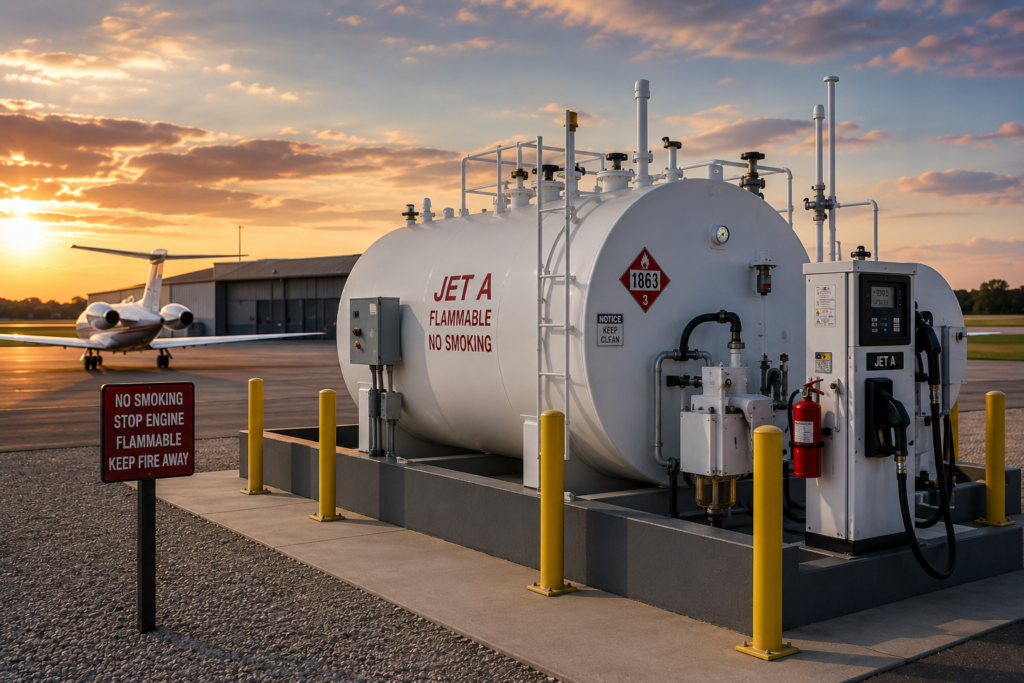
Many installations also require bollards, guardrails, or other protective barriers to reduce the chance of vehicle damage. Ground support equipment, service trucks, and fuel delivery vehicles all operate around the tank, so physical protection is an important part of the overall design.
Electrical components, emergency shutoffs, grounding, bonding, signage, and fire protection should also be included during the planning stage instead of being added later.
Look at the Entire Fueling System
An aviation fuel storage tank is only one part of a complete fueling system. Every component should work together to improve safety, fuel quality, and day-to-day operation.
That includes:
- Storage tank.
- Secondary containment.
- Pumps and motors.
- Filters and water separators.
- Meters.
- Hoses and nozzles.
- Emergency shutoffs.
- Tank gauges.
- Overfill prevention equipment.
- Leak detection and monitoring equipment.
Planning the complete system at one time helps avoid compatibility problems and often reduces installation costs.
Many larger projects also benefit from custom-engineered fueling packages designed around the customer’s operation instead of adapting off-the-shelf equipment after installation.
Understand the Codes and Regulations
Every aviation fueling project has its own requirements. Depending on the location, you may need to follow local fire codes, airport standards, insurance requirements, environmental regulations, and nationally recognized standards.
For many installations, NFPA 30 provides important guidance for flammable and combustible liquid storage. Facilities that store larger volumes of fuel may also need to comply with EPA 40 CFR Part 112 and prepare a Spill Prevention, Control, and Countermeasure (SPCC) Plan.
Many aviation projects also use tanks built to recognized industry standards from the Steel Tank Institute (STI).
Every airport is different, so always confirm local requirements before ordering equipment. Addressing code questions early helps prevent delays, unexpected costs, and field modifications after the tank arrives.
Build for Easy Maintenance
A quality aviation fueling system should be easy to inspect and maintain throughout its service life. When routine maintenance is simple, crews are more likely to perform inspections on schedule and catch small problems before they become expensive repairs.
Design the system so technicians can safely reach filters, drains, vents, gauges, emergency shutoffs, and equipment enclosures. Replacement parts should also remain easy to access without shutting down the entire fueling operation for long periods.
A regular maintenance program should include:
- Tank inspections.
- Water checks.
- Filter replacement.
- Hose and nozzle inspections.
- Gauge verification.
- Containment inspections.
- Leak detection equipment.
- Grounding and bonding connections.
- Emergency shutoff testing.
Employee training is just as important as the equipment itself. Everyone involved in fuel handling should understand proper fueling procedures, fuel quality checks, spill response, and when equipment should be removed from service for repair.
Partner With an Experienced Tank Manufacturer
Choosing the right aviation fuel storage tank involves much more than selecting a capacity. The best system balances fuel quality, safety, maintenance, regulatory requirements, and the daily needs of your operation.
At Clark Welding Tanks, we build American-made aboveground fuel storage tanks for a wide range of commercial and industrial applications. Whether you need a UL 142 above ground storage tank, a Flameshield® tank, a UL 2085 Fireguard® tank, or a custom fueling solution, our team can help you select equipment that fits your project.
If you’re planning a new aviation fueling system or upgrading an existing installation, Contact Clark Welding Tanks to discuss your project. You can also Request a fuel storage tank quote, explore the Industries we serve, or Apply for financing for qualified purchases.
The right aviation fuel storage tank keeps fuel clean, supports safe fueling, and serves your operation for years to come. Careful planning today leads to a safer, more reliable fueling system tomorrow.