What Are Self Contained Tanks?
Lost production often starts with something simple, waiting on fuel. A construction crew standing idle until the fuel truck arrives costs time and money. Likewise, a generator without a dependable fuel supply can become a serious problem during a power outage. That is why many businesses choose self contained tanks that combine fuel storage and dispensing into one complete system.
Self contained tanks are used every day on construction sites, farms, fleet yards, quarries, utility operations, municipalities, airports, and industrial facilities. Instead of storing fuel in one location and dispensing it from another, these systems keep everything together in a practical package. The result is faster fueling, better organization, and greater control over where fuel is stored and dispensed.
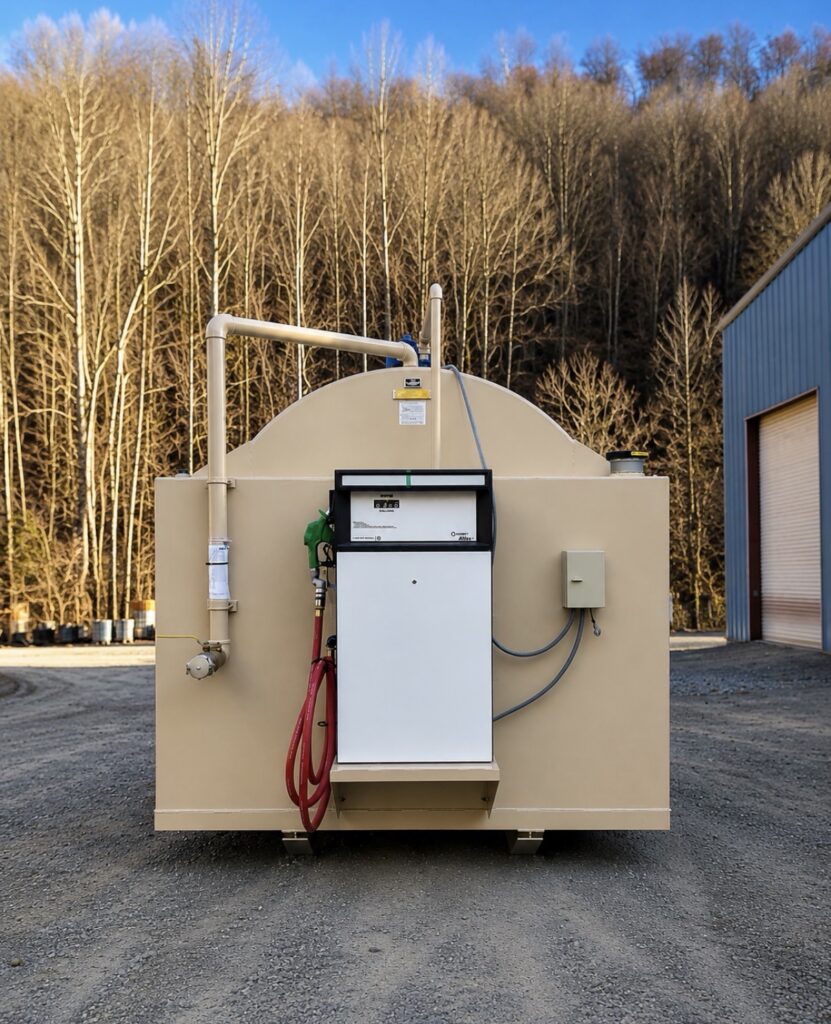
A self contained above ground storage tank combines a fuel storage tank with the equipment needed to dispense fuel safely and efficiently. Depending on the application, the system may include a pump, meter, filter, hose reel, nozzle, lockable pump cabinet, fuel management controls, and other accessories. Rather than purchasing each component separately, the entire fueling package is designed to work together.
That does not mean every system looks the same. One customer may need a basic diesel fueling tank for a small farm, while another requires high-flow pumps, filtration, digital metering, remote monitoring, and controlled access for a busy fleet yard. The best self contained tanks are built around the application instead of using the same equipment for every customer.
Why Self Contained Tanks Make Sense
The biggest advantage of self contained tanks is convenience. Fuel storage and dispensing stay together in one organized system that is ready when operators need it. Pumps, filters, meters, and hoses are protected inside a dedicated enclosure instead of being mounted separately or exposed to weather and accidental damage.
Just as important, these systems help improve productivity. Equipment operators spend less time traveling for fuel, which means more time working. A properly located fueling system can reduce unnecessary trips across a large property, eliminate delays waiting on portable fuel trucks, and simplify daily operations. Over time, those small time savings can add up across an entire fleet.
An integrated fueling package also helps protect valuable equipment. Proper filtration removes contaminants before fuel reaches expensive engines and fuel systems. Secure pump cabinets help discourage unauthorized use, while organized plumbing and wiring make routine maintenance much easier.
There is one important consideration. A self contained fueling system should be specified around the actual operation. Pump flow rate, hose length, filtration, power supply, and fuel management equipment should match the work being performed. Overspecifying the system increases cost without adding value, while underspecifying it can create bottlenecks every day.
Start With the Fuel and the Application
The first step in selecting self contained tanks is understanding what fuel will be stored and how the system will be used. Diesel remains the most common choice for construction companies, farms, municipalities, mining operations, fleet fueling, and standby generators. Gasoline applications often require additional planning because local codes and site conditions may affect the type of tank and level of fire protection required.
If you’re comparing different tank designs, our guides on UL 142 fuel storage tanks and Choosing the right above ground fuel storage tank explain many of the decisions that affect long-term performance. Industry standards such as UL 142 Aboveground Flammable Liquid Tanks also provide valuable information about aboveground steel fuel tanks.
Diesel storage systems should also account for fuel quality. Water and particulate contamination can shorten the life of injectors, pumps, and other fuel system components. For that reason, many self contained tanks include quality filtration and water separation to help keep fuel clean before it reaches the equipment.
The application matters just as much as the fuel. A self contained fueling system for a standby generator may focus on reliability, fuel cleanliness, and dependable transfer capability. A system serving a busy fleet yard may need higher pump flow rates, longer hose reels, digital metering, and fuel management controls. Meanwhile, a portable fueling system for a construction project may place greater importance on security, durability, and ease of relocation.
Before requesting a quote, gather as much information as possible about the project. Monthly fuel usage, the number of machines fueled each day, available power, expected delivery schedule, and whether the tank will remain in one location or move with the job all help determine the best configuration. The more information you provide, the easier it is to build a system that fits the operation.
Tank Capacity Should Match Fuel Demand
One of the biggest mistakes buyers make is assuming bigger is always better. While a larger tank reduces the number of fuel deliveries, it also requires more space, ties up more inventory, and can leave fuel sitting longer than intended.
Instead, size the tank around actual fuel consumption. Estimate daily or weekly usage, delivery schedules, and the amount of reserve fuel your operation requires. A remote construction project may justify additional reserve capacity, while a fleet yard with scheduled fuel deliveries may operate efficiently with a smaller tank.
Future growth should also be part of the conversation. If additional equipment or vehicles are expected over the next several years, selecting a slightly larger tank or a system designed for future pump upgrades may make sense. However, growth projections should be realistic. Oversizing a tank without a clear plan can reduce fuel turnover and increase long-term storage concerns.
If your operation supports emergency power, our Generator Base Fuel Tank Buyer’s Guide explains many of the factors that influence fuel capacity planning for standby generators.
Choose the Right Tank Construction
Not all self contained tanks are built the same. One of the first decisions is whether the application calls for a single-wall or double-wall tank.
A UL 142 above ground storage tank is a common choice for commercial, industrial, agricultural, and municipal fuel storage. Single-wall tanks may be appropriate where approved external secondary containment is provided. Double-wall tanks include built-in secondary containment, which can simplify many installations while providing an additional layer of environmental protection.
Some projects require greater fire protection because of the tank location or local code requirements. In those cases, a UL 2085 Fireguard® tank or STI Flameshield® tank may be the better solution. If you’re comparing these designs, our UL 2085 vs. UL 142 guide explains when each type is commonly used.
Regardless of the tank you choose, proper installation remains critical. Local codes, the authority having jurisdiction, insurance requirements, and standards such as NFPA 30 should always be reviewed before the project moves forward.
Specify the Dispensing Equipment Around Daily Use
The storage tank is only one part of the system. What makes self contained tanks so useful is the equipment that allows operators to fuel safely, efficiently, and consistently every day. Choosing the right dispensing package is just as important as choosing the right tank.
A small operation may only need a standard pump, hose, nozzle, filter, and mechanical meter. A busy fleet yard or construction company may benefit from higher-flow pumps, longer hose reels, digital meters, fuel management systems, and controlled access. Matching the equipment to the job improves productivity and helps avoid unnecessary upgrades later.
Power requirements should also be considered early in the project. Pumps can be configured for 12-volt DC, 115-volt AC, 230-volt AC, or other power sources depending on the application. Before specifying the system, confirm what electrical service is available and whether reliable power will always be accessible.
Quality components also make a difference over the life of the system. Many buyers choose equipment from manufacturers such as Fill-Rite, Great Plains Industries, Franklin Fueling Systems, Gasboy, OPW, Hannay Reels, and Cim-Tek Filtration because they are widely used throughout the fuel storage industry.
Protect Fuel Quality
Clean fuel is just as important as dependable fuel storage. Water, dirt, and other contaminants can damage pumps, injectors, filters, and modern fuel systems long before operators realize there is a problem.
For diesel applications, quality filtration and water separation should be part of the overall system design. If fuel will remain in storage for extended periods, routine maintenance and fuel quality management become even more important. A properly designed dispensing system helps protect expensive equipment while reducing avoidable maintenance costs.
Leak detection and overfill protection should also be considered during the planning stage. Our guides on Leak Detection for Fuel Tanks and Overfill Prevention for Fuel Tank Systems explain how these systems help reduce spills, protect the environment, and improve day-to-day operations.
Plan the Installation Before the Tank Arrives
Even the best self contained tanks perform poorly if the installation site is not prepared. Planning ahead helps prevent delivery delays, costly modifications, and unnecessary downtime.
Start with the foundation. It should provide stable, level support for the fully loaded tank while meeting the recommendations of the project engineer. Tank manufacturers can provide dimensions, weights, and support locations, but the foundation design should account for local soil conditions, anticipated loads, wind, and seismic requirements where applicable.
Next, think about access. Fuel delivery trucks need enough room to safely unload product, and operators need convenient access to the dispensing equipment without creating traffic conflicts. The tank should also remain accessible for inspections, filter changes, maintenance, and future service work.
Finally, consider protecting the investment. Vehicle impact protection, proper drainage, spill response supplies, and routine inspections all help extend the life of the system. A simple inspection program can identify damaged hoses, worn nozzles, leaking fittings, or loose connections before they become expensive repairs.
Work With a Manufacturer That Understands Your Operation
The best self contained tanks are not chosen by capacity alone. A dependable fueling system starts with understanding the application, the fuel being stored, the equipment being fueled, and the level of protection the site requires. That is why an experienced manufacturer should ask questions before recommending a specific configuration.
For example, a contractor fueling excavators on multiple jobsites has different needs than a municipality fueling maintenance trucks every day. Likewise, a farm storing off-road diesel has different priorities than a hospital supporting emergency generators. The right pump, filtration, tank construction, hose length, meter, and accessories all depend on how the system will be used.
An experienced manufacturer can also help identify details that are often overlooked, including future expansion, delivery access, secondary containment, leak detection, overfill prevention, and maintenance requirements. Addressing those items during the planning stage usually saves both time and money later.
Think Beyond the Tank
A successful fueling system is more than a steel tank with a pump attached. It is a complete package that includes the right tank construction, dispensing equipment, filtration, controls, safety features, and installation planning.
Before purchasing self contained tanks, consider how the entire system will operate five or ten years from now. Will your fleet grow? Will fuel demand increase? Will additional equipment be added? Planning for future needs today can help avoid expensive modifications later.
You should also review applicable environmental and fire protection requirements before installation. Resources such as the EPA Spill Prevention, Control, and Countermeasure (SPCC) rule, NFPA 30, and the Steel Tank Institute (STI) provide valuable information about aboveground fuel storage and industry best practices.
Choosing the Right Self Contained Tanks
The right self contained tanks simplify fueling, improve productivity, and help protect both equipment and fuel. Start by identifying the fuel type, expected fuel demand, site conditions, dispensing requirements, and applicable codes. Then choose a system that matches the work being performed instead of paying for features that provide little benefit.
At Clark Welding Tanks, we’ve been building American-made aboveground fuel storage tanks since 1991. We help customers select complete fueling systems for construction, fleet, agricultural, mining, municipal, industrial, and emergency power applications. Whether you need a basic diesel dispensing tank or a fully equipped fueling package, we’ll help configure a system that fits your operation.
If you’re ready to discuss your project, contact Clark Welding Tanks or request a fuel storage tank quote. We’ll help you choose the right self contained tanks so your equipment stays fueled, your crews stay productive, and your operation keeps moving.