How to Specify UL Tanks: Start With the Application
A good tank specification does much more than list a capacity and request a price. Knowing how to specify UL tanks means understanding what the tank will store, where it will be installed, how it will be used, and which codes and standards apply. Those decisions affect everything from tank construction and containment to fittings, fire protection, and long-term performance.
Taking the time to develop a complete UL tank specification early in the project helps prevent costly change orders, installation delays, and equipment that does not meet the needs of the facility. It also gives tank manufacturers the information they need to provide an accurate quotation instead of making assumptions that may lead to problems later.
Whether the tank will serve a fleet fueling operation, emergency generator, construction project, farm, municipality, airport, or industrial facility, the specification should always start with the application. Instead of asking, “How many gallons do we need?” first ask, “What job does this tank need to perform?” The answer will guide nearly every decision that follows.
Start With the Correct UL Standard
The first step in learning how to specify UL tanks is identifying the correct UL listing for the project. For many aboveground fuel storage applications, a UL 142 above ground storage tank is the starting point. UL 142 covers steel aboveground tanks designed to store flammable and combustible liquids such as diesel fuel, gasoline, heating oil, lubricants, and waste oil when used within the scope of the standard.
However, not every project requires the same type of tank. If the installation calls for a protected aboveground storage tank, a UL 2085 Fireguard® tank or STI Flameshield® tank may be the better choice. If you are unsure which design fits your project, our guide comparing UL 2085 vs. UL 142 explains the differences and when each type is commonly used.
The required UL standard depends on several factors, including the fuel being stored, the location of the tank, local fire codes, property layout, separation distances, insurance requirements, and the authority having jurisdiction (AHJ). A tank installed at a remote construction yard may have different requirements than one located beside a hospital, airport, manufacturing facility, or occupied building.
Before finalizing your specification, confirm the applicable requirements with your engineer, fire marshal, insurer, and local code officials. You can also review UL 142 Aboveground Flammable Liquid Tanks and NFPA 30 to better understand the standards that often apply to aboveground fuel storage systems.
Define the Fuel and Required Capacity
Once you identify the correct UL standard, clearly define what the tank will store. A specification that simply says “fuel tank” leaves too much room for interpretation. Instead, identify whether the tank will store on-road diesel, off-road diesel, gasoline, biodiesel blends, heating oil, waste oil, or another approved liquid. The product being stored affects venting, filtration, compatible accessories, labeling, and other important design details.
Next, determine how much usable fuel the operation actually requires. Instead of selecting a tank based only on its advertised capacity, consider daily fuel consumption, delivery schedules, emergency reserve requirements, and the impact of delayed fuel deliveries. A properly sized tank supports efficient operations without tying up unnecessary inventory or requiring more frequent deliveries than necessary.
The available space is just as important as the number of gallons. A horizontal tank, vertical storage tank, or rectangular tank may all provide the required capacity, but each one has different footprint, height, access, and foundation requirements. Include the maximum allowable length, width, and height in the specification, along with enough space for fuel deliveries, maintenance, vents, and emergency access.
For generator applications, capacity should match the equipment’s operating requirements instead of an arbitrary tank size. Our Generator Base Fuel Tank Buyer’s Guide explains many of the factors that influence generator fuel storage design.
Specify Single-Wall or Double-Wall Construction
One of the most important decisions in any UL tank specification is whether the project requires a single-wall or double-wall tank. The correct choice depends on site conditions, environmental requirements, available space, and the owner’s operating preferences.
A single-wall UL 142 above ground storage tank may be the right solution when the installation includes an approved external secondary containment system, such as a concrete containment area or engineered dike. This approach works well for many industrial and commercial sites where adequate space is available and containment has already been planned.
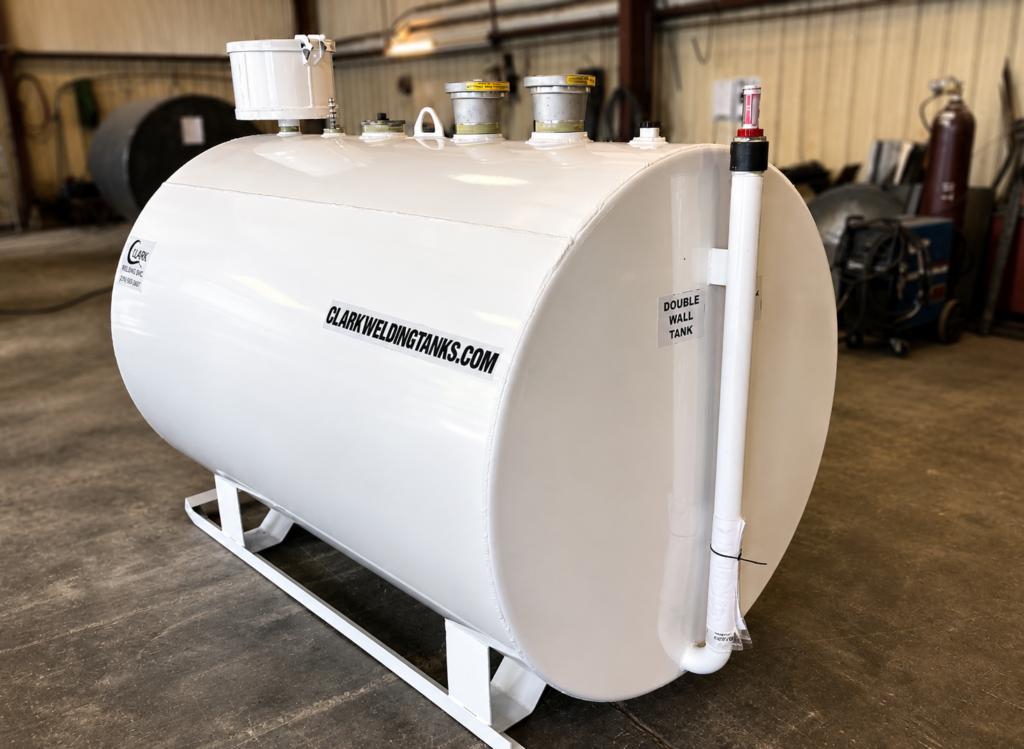
A double-wall tank incorporates built-in secondary containment by surrounding the primary steel tank with a second steel wall. This design often reduces the footprint required for a separate containment structure while providing an additional layer of environmental protection. Many fleet fueling operations, construction companies, municipalities, and industrial facilities choose this design because it simplifies installation and helps keep the entire system compact.
If you’d like to learn more about built-in containment, our guide to Self-contained above ground storage tanks explains how these systems work and where they are commonly used.
Regardless of which construction you choose, remember that secondary containment is only one part of the overall fuel storage system. Local regulations, drainage, leak detection, inspection procedures, and spill response planning should all be considered before the specification is finalized.
Match Fire Protection to the Site
Standard UL 142 construction meets the needs of many aboveground fuel storage installations. However, some projects require additional fire protection because of the tank location, nearby buildings, property lines, or the critical nature of the operation.
When that happens, a UL 2085 Fireguard® tank may be required. These protected tanks are commonly used at hospitals, airports, data centers, government facilities, emergency operations centers, and other locations where additional fire protection or reduced separation distances may be necessary.
Another option is the STI Flameshield® tank, which provides enhanced fire protection while remaining a UL 142 listed tank. Understanding the differences between these tank designs before requesting bids helps ensure every manufacturer is quoting the same type of construction.
Avoid using general phrases such as “fire-rated tank” in your specification. Instead, identify the exact listing required for the project. If the design calls for UL 2085, specify UL 2085. If the project requires a particular listing or insurer requirement, include that information in the bid documents so every contractor is pricing the same equipment.
Include the Right Fittings and Accessories
A fuel tank is only one part of a complete storage system. Many problems begin because a tank was ordered without clearly defining the fittings, vents, pumps, or accessories needed for the application. Knowing how to specify UL tanks means thinking beyond the tank shell and considering how the entire system will operate.
A complete UL tank specification should identify the size, type, and location of each required connection whenever possible. Depending on the application, this may include fill connections, normal vents, emergency vents, supply and return lines, low-point drains, inspection openings, lifting lugs, spare fittings for future expansion, and tank gauges.
The specification should also describe how fuel will move through the system. If the tank will dispense fuel, identify whether it needs a pump, meter, hose reel, filter, automatic nozzle, fuel management system, or protective bollards. Taking the time to define these details early helps prevent confusion during manufacturing and installation.
Many facilities also benefit from quality equipment manufactured by companies such as Fill-Rite, OPW, Franklin Fueling Systems, Gasboy, and Cim-Tek Filtration. Selecting dependable components can improve long-term reliability and simplify future maintenance.
Generator fuel systems deserve additional attention. A specification should clearly identify whether the project includes a day tank, base tank, remote bulk tank, or an automated fuel transfer system. Supply piping, return piping, controls, leak detection, and alarms should all work together as part of one complete fuel storage system.
Overfill protection should also be addressed during the specification process instead of being added later. Fuel deliveries create one of the highest risks for accidental spills, so identify whether the project requires mechanical overfill prevention, high-level alarms, audible or visual notifications, or remote monitoring. Our guide to Overfill prevention for fuel tank systems explains why these systems are an important part of safe fuel storage. Manufacturers such as Morrison Bros. Overfill Prevention Valves also offer equipment designed specifically for aboveground storage tanks.
Plan for Foundation and Site Conditions
Even the best-built tank depends on a properly prepared installation site. Every UL tank specification should include information about the proposed foundation, support conditions, anchoring requirements, and any site limitations that could affect delivery or installation.
Before ordering the tank, think through the entire delivery process. Consider gate widths, overhead power lines, turning space for delivery trucks, crane access, slopes, existing utilities, and the final placement location. These details become even more important for large double-wall and protected tanks because they often weigh significantly more than comparable single-wall designs.
Support conditions also matter. The tank manufacturer can provide dimensions, weights, and support locations, but the project engineer should design the foundation for the actual soil conditions, wind loads, seismic requirements, and anticipated operating loads. Our Tank Supports resource provides additional information about common support configurations for aboveground storage tanks.
Finally, consider the environment where the tank will operate. A tank installed at a quarry, mining operation, marine facility, or exposed mountain site may require different coatings, corrosion protection, access platforms, or weather protection than a tank located inside a sheltered industrial yard. Identifying these conditions before manufacturing begins helps ensure the finished tank performs as expected for many years.
Write a Specification That Can Be Quoted Accurately
The best UL tank specifications leave very little open to interpretation. Every bidder should understand exactly what equipment is being requested so each proposal is based on the same scope of work. Clear specifications save time, reduce questions during the bidding process, and help avoid unexpected costs after the project begins.
At a minimum, your specification should include the required UL standard, tank capacity, product being stored, tank orientation, single-wall or double-wall construction, containment requirements, coating expectations, fitting schedule, accessory list, delivery location, and any required drawings or documentation. If inspections, testing, or certifications are required, include those requirements as well.
Avoid combining requirements that conflict with one another. For example, requesting a standard UL 142 tank while expecting UL 2085 protected tank performance creates confusion for manufacturers and contractors. Likewise, asking for “all required fittings” without identifying the equipment being connected leaves too much room for interpretation. A complete specification produces more accurate pricing and a smoother project.
If environmental regulations apply to your facility, review the EPA Spill Prevention, Control, and Countermeasure (SPCC) requirements during the planning stage. These regulations, along with local fire codes and insurance requirements, may influence tank selection, containment, and operating equipment.
A Better Way to Specify UL Tanks
The simplest answer to how to specify UL tanks is to think beyond the tank itself. Start with the fuel being stored and the demands of the operation. Then identify the correct UL listing, determine the appropriate containment method, evaluate fire protection needs, and specify the fittings, accessories, and equipment required to build a complete fuel storage system.
Good planning almost always leads to a better installation. It reduces delays, helps contractors submit more accurate bids, and ensures the finished tank supports the operation for years to come. Spending a little more time developing the specification before requesting quotes often saves significant time and expense later in the project.
At Clark Welding Tanks, we’ve been building aboveground steel storage tanks since 1991. We work with customers across commercial, industrial, agricultural, municipal, mining, aviation, and construction industries to help develop practical fuel storage solutions that match their applications. If questions come up during the planning process, it is always easier to address them before fabrication begins.
Whether you are specifying a UL 142 above ground storage tank, a UL 2085 Fireguard® tank, or another aboveground fuel storage system, taking the time to create a complete specification helps every part of the project move more smoothly.
If you’re ready to discuss your project, contact Clark Welding Tanks or request a fuel storage tank quote. Our team can help you select the right tank, accessories, and equipment for your application while making sure your specification is complete before production begins.