
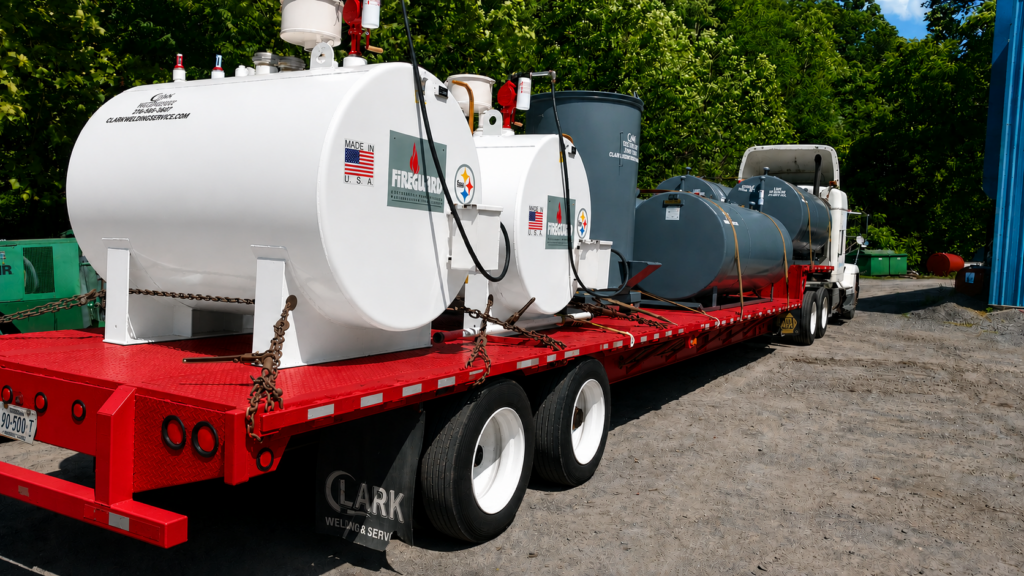
Understanding UL 142 vs. UL 2085 Above Ground Storage Tanks
Choosing between a UL 142 above ground storage tank and a UL 2085 Fireguard® tank is about much more than capacity or price. The right choice depends on where the tank will be installed, the level of fire protection required, available space, local code requirements, and the needs of your facility.
Many people assume all above ground storage tanks are built the same. In reality, a standard UL 142 tank and a UL 2085 protected tank are designed for different situations. Understanding those differences before you buy can save time, reduce project costs, and help avoid unexpected issues during permitting or inspection.
Whether you’re fueling a fleet, supplying emergency generators, supporting construction equipment, serving a farm, or operating an industrial facility, selecting the right tank starts with understanding what each UL listing actually means. If you’re still comparing different tank styles, our guide on Choosing the right above ground fuel storage tank is a helpful place to start.
What Is the Difference Between UL 142 and UL 2085?
A UL 142 tank is built to a nationally recognized construction standard for above ground steel tanks used to store flammable and combustible liquids. The listing covers how the tank is designed, fabricated, welded, tested, and inspected.
A UL 2085 tank is a protected above ground storage tank. In addition to meeting construction requirements, it includes a tested protective system that provides a much higher level of fire resistance and physical protection. These tanks undergo additional testing for fire exposure, impact resistance, thermal shock, and hose-stream performance.
Many UL 2085 tanks are sold as Fireguard® tanks. Fireguard® is a registered trademark of the Steel Tank Institute (STI) for a specific protected tank design. You can learn more in our Fireguard® tank buyer’s guide.
The simplest way to think about the difference is this:
- UL 142 focuses on how the tank is built.
- UL 2085 focuses on how the complete protected tank performs during severe fire conditions.
A UL 2085 tank normally includes a UL 142 primary steel tank inside the protected assembly. However, adding barriers, insulation, bollards, or concrete around a standard UL 142 tank does not make it a UL 2085 listed tank.
When a UL 142 Tank Is the Right Choice
For many installations, a UL 142 above ground storage tank is the practical and cost-effective solution.
These tanks are commonly used for:
- Diesel fuel
- Gasoline
- Heating oil
- Waste oil
- Lubricants
- DEF
- Compatible chemical storage
UL 142 tanks are available in both single-wall and double-wall designs.
A single-wall tank may require external secondary containment when environmental regulations or local codes require spill protection.
A double-wall UL 142 tank provides built-in secondary containment by surrounding the primary tank with an outer steel wall. This design helps contain leaks while reducing the need for separate containment systems.
For many farms, equipment yards, maintenance facilities, municipalities, contractors, and manufacturing plants, a double-wall UL 142 tank offers an excellent balance of durability, environmental protection, and value.
If you’d like to learn more about construction, applications, and available options, visit our UL 142 fuel storage tanks buyer’s guide.
Understanding UL 142 vs. UL 2085 Above Ground Storage Tanks
Choosing between a UL 142 above ground storage tank and a UL 2085 Fireguard® tank is about much more than capacity or price. The right choice depends on where the tank will be installed, the level of fire protection required, available space, local code requirements, and the needs of your facility.
Many people assume all above ground storage tanks are built the same. In reality, a standard UL 142 tank and a UL 2085 protected tank are designed for different situations. Understanding those differences before you buy can save time, reduce project costs, and help avoid unexpected issues during permitting or inspection.
Whether you’re fueling a fleet, supplying emergency generators, supporting construction equipment, serving a farm, or operating an industrial facility, selecting the right tank starts with understanding what each UL listing actually means. If you’re still comparing different tank styles, our guide on Choosing the right above ground fuel storage tank is a helpful place to start.
What Is the Difference Between UL 142 and UL 2085?
A UL 142 tank is built to a nationally recognized construction standard for above ground steel tanks used to store flammable and combustible liquids. The listing covers how the tank is designed, fabricated, welded, tested, and inspected.
A UL 2085 tank is a protected above ground storage tank. In addition to meeting construction requirements, it includes a tested protective system that provides a much higher level of fire resistance and physical protection. These tanks undergo additional testing for fire exposure, impact resistance, thermal shock, and hose-stream performance.
Many UL 2085 tanks are sold as Fireguard® tanks. Fireguard® is a registered trademark of the Steel Tank Institute (STI) for a specific protected tank design. You can learn more in our Fireguard® tank buyer’s guide.
The simplest way to think about the difference is this:
- UL 142 focuses on how the tank is built.
- UL 2085 focuses on how the complete protected tank performs during severe fire conditions.
A UL 2085 tank normally includes a UL 142 primary steel tank inside the protected assembly. However, adding barriers, insulation, bollards, or concrete around a standard UL 142 tank does not make it a UL 2085 listed tank.
When a UL 142 Tank Is the Right Choice
For many installations, a UL 142 above ground storage tank is the practical and cost-effective solution.
These tanks are commonly used for:
- Diesel fuel
- Gasoline
- Heating oil
- Waste oil
- Lubricants
- DEF
- Compatible chemical storage
UL 142 tanks are available in both single-wall and double-wall designs.
A single-wall tank may require external secondary containment when environmental regulations or local codes require spill protection.
A double-wall UL 142 tank provides built-in secondary containment by surrounding the primary tank with an outer steel wall. This design helps contain leaks while reducing the need for separate containment systems.
For many farms, equipment yards, maintenance facilities, municipalities, contractors, and manufacturing plants, a double-wall UL 142 tank offers an excellent balance of durability, environmental protection, and value.
If you’d like to learn more about construction, applications, and available options, visit our UL 142 fuel storage tanks buyer’s guide.
Fire Protection, Secondary Containment, and Tank Placement
One of the biggest misconceptions when comparing UL 142 vs. UL 2085 tanks is that fire protection and secondary containment are the same thing. They are not. Each serves a different purpose.
Secondary containment is designed to control a leak or spill from the primary tank. A double-wall UL 142 above ground storage tank accomplishes this with an outer steel wall that surrounds the primary tank. Many UL 2085 Fireguard® tanks also include integral secondary containment as part of the listed assembly.
Fire protection addresses a completely different concern. It focuses on how the tank performs if it is exposed to intense heat from a nearby fire.
A properly installed UL 142 tank may be exactly the right choice when the site has adequate separation distances and meets local code requirements. A UL 2085 protected tank is often selected when available space is limited, nearby buildings or equipment increase fire exposure, or the owner wants an added level of protection for valuable fuel inventory.
Tank placement always depends on the project. Factors such as the fuel being stored, tank capacity, dispensing equipment, nearby structures, property lines, emergency access, and local fire code all influence where a tank can be installed.
Requirements may also come from NFPA 30, environmental regulations such as EPA 40 CFR Part 112, insurance carriers, and local building or fire departments. Ultimately, the Authority Having Jurisdiction (AHJ) has the final approval for a specific installation.
Comparing the Total Cost of Ownership
Many buyers compare only the purchase price of the tank. While that’s understandable, it rarely tells the whole story.
A UL 2085 protected tank costs more than a comparable UL 142 tank because it includes additional protective materials, more complex construction, and significantly greater shipping weight.
However, the tank itself is only one part of the overall project.
A standard UL 142 installation may require:
- Larger separation distances
- Additional vehicle barriers
- External secondary containment
- More grading or site preparation
- Longer piping runs
- Additional concrete work
On some projects, those added site costs can reduce or even eliminate the price difference between the two tank types.
Facilities such as hospitals, data centers, emergency operations centers, utilities, airports, and municipal fueling stations often look beyond the initial purchase price. They value the additional protection because maintaining fuel availability during an emergency is part of their overall continuity plan.
Every project is different. Looking at the total installed cost instead of the tank price alone usually leads to a better long-term decision.
How to Choose Between a UL 142 and UL 2085 Tank
The best place to start is with the application.
Think about the type of liquid you’ll be storing, how much fuel you need, how often the tank will be filled, and whether the system will dispense fuel, supply an emergency generator, or simply provide bulk storage.
Next, evaluate the installation site. Measure the available space and consider nearby buildings, property lines, traffic patterns, emergency vehicle access, drainage, and potential ignition sources. A tank that appears less expensive on paper may require significant site work before it can be installed.
It’s also a good idea to involve the Authority Having Jurisdiction (AHJ), your insurance carrier, and other project stakeholders early in the planning process. Confirm which codes apply, what separation distances are required, and whether a protected tank will be necessary for your installation. Answering those questions before placing an order can prevent costly changes later.
For many applications, a UL 142 above ground storage tank provides a durable, code-recognized, and economical solution. When available space is limited, fire exposure is greater, or business continuity is critical, a UL 2085 Fireguard® tank may be the better long-term investment.
There isn’t a single answer that fits every project. The right tank depends on your site, your operation, and the codes that apply to your installation.
Let Clark Welding Tanks Help You Choose the Right Tank
At Clark Welding Tanks, we don’t believe every customer needs the most expensive tank. We believe every customer deserves the right tank for their application.
Our team will help you evaluate your fuel type, storage capacity, installation location, dispensing equipment, and project requirements so you can confidently choose between a UL 142 tank and a UL 2085 protected tank.
Whether you’re planning a new installation or replacing an existing tank, we’re here to answer your questions and help you build a system that will serve your operation for years to come.
If you’re ready to discuss your project, request a fuel storage tank quote or contact Clark Welding Tanks today.