Why Heated Insulated Storage Tanks Matter
A storage tank that works perfectly through the summer can become one of the biggest headaches on a jobsite after the first hard freeze. Diesel can begin to cloud, lubricants become difficult to pump, and water-based products can freeze hard enough to damage piping, pumps, meters, and valves. In many cases, the tank is not the problem. The product inside the tank has simply become too cold to move or perform as intended.
Heated insulated storage tanks help solve that problem by keeping temperature-sensitive liquids within a usable operating range. Whether the application involves diesel fuel, lubricants, waste oil, water, chemicals, or another industrial liquid, the goal is the same: protect product quality, maintain dependable flow, and reduce costly downtime during cold weather.
A properly designed system combines insulation, a reliable heating method, and temperature controls that match the stored product. When those components work together, operators spend less time dealing with frozen equipment and more time keeping their business running.
Not every application requires heat. Many products store safely without it. However, if cold temperatures affect pumping, dispensing, blending, or product quality, a heated insulated tank may become one of the most valuable upgrades you can make.
How a Heated Insulated Tank Works
A heated insulated tank performs two important jobs.
First, insulation slows heat loss through the tank shell. Quality insulation helps maintain a more consistent product temperature while reducing the amount of energy needed to keep the tank warm. It also minimizes temperature swings during long winter nights and periods of low product use.
Second, the heating system supplies enough heat to maintain the desired product temperature. Without insulation, much of that heat escapes into the surrounding air. Without heat, insulation alone cannot prevent products from eventually becoming too cold.
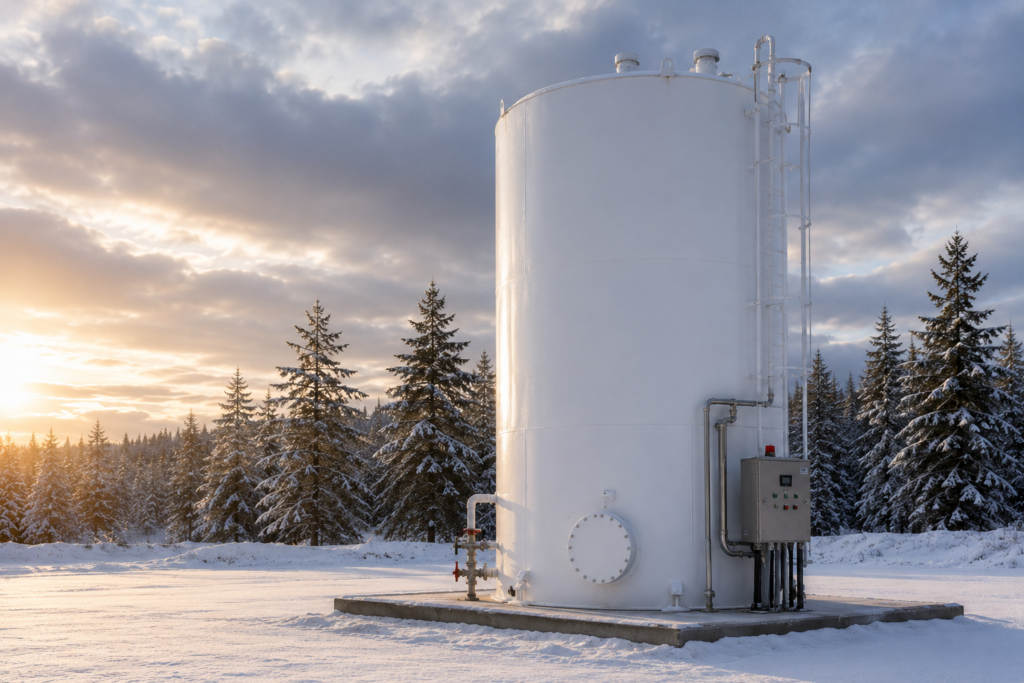
Many industrial storage tanks use electric immersion heaters installed inside a flanged heater well. This design allows the heating element to be removed for maintenance without draining the tank. An external control panel monitors and regulates temperature while helping protect the heating system from overheating or unnecessary power consumption.
The heating package should always match the product being stored. A diesel storage tank requires different temperature control than a water tank, lubricant tank, waste oil tank, or chemical storage system. Product viscosity, desired pumping temperature, available electrical service, and operating conditions all influence the final design.
When Heated Storage Tanks Make Sense
Most people associate heated tanks with freezing weather, but winter protection is only part of the story.
Many liquids become significantly thicker long before they actually freeze. As temperatures fall, pumps work harder, filters restrict flow, meters lose accuracy, and dispensing becomes slower. Operators often assume equipment has failed when the real issue is simply that the stored product has become too cold.
Heated insulated tanks are commonly used for:
- Diesel fuel storage in cold climates.
- Lubricating oils that become difficult to pump.
- Waste oil collection systems.
- Water and water-based solutions exposed to freezing temperatures.
- Temperature-sensitive chemicals and industrial process liquids.
- Liquids used in manufacturing or blending operations.
Facilities that operate year-round often benefit the most. Construction companies, farms, municipalities, utilities, industrial plants, airports, and fleet maintenance facilities cannot always wait for warmer weather before fueling equipment or transferring product.
In many cases, preventing one frozen pump or damaged meter can justify the investment in a properly designed heating system.
Start With the Product, Not the Heater
Choosing a heated storage tank should always begin with the liquid you plan to store. Every product reacts differently to cold weather. Some liquids freeze. Others remain liquid but become too thick to pump efficiently. Understanding how your product behaves helps determine whether heat is needed and how much heat the system should provide.
For example, diesel fuel can experience clouding and gelling during cold weather, depending on the fuel blend and outside temperature. Lubricating oils often become much thicker as temperatures drop, making pumps work harder and slowing transfer rates. Water-based products can freeze and damage piping, valves, pumps, and meters if they are not adequately protected.
Ask these questions before selecting a heated tank:
- What product will the tank store?
- What temperature should the product remain at?
- How cold does the installation site get?
- How often will the product be used?
- Will the tank operate year-round or only seasonally?
- Is electrical power available for the heating system?
The answers help determine the proper heater size, insulation package, control system, and overall tank design.
The Entire System Needs Cold-Weather Protection
Heating the tank alone does not guarantee reliable winter operation.
Many cold-weather problems occur outside the tank itself. Product may leave the tank at the correct temperature but cool rapidly inside exposed piping, pumps, filters, meters, or dispensing hoses. If those components freeze or become restricted, the entire system can stop working even though the tank remains warm.
That is why heated storage systems should be viewed as complete packages rather than individual pieces of equipment.
Depending on the application, the system may include:
- Insulated piping.
- Heat tracing on exposed lines.
- Protected pump enclosures.
- Heated filter housings.
- Temperature controls and monitoring equipment.
- Properly insulated valves and accessories.
Looking at the complete system during the design stage helps prevent expensive surprises after installation.
Choosing the Right Tank Configuration
The heating system is only one part of the project. The storage tank itself still needs to match the application.
Many heated systems begin with a UL 142 above ground storage tank because it offers a dependable foundation for storing combustible and flammable liquids. Depending on the installation, customers may also choose a Flameshield® tank or a Fireguard® tank when additional fire protection is required.
The best configuration depends on several factors, including:
- Product type.
- Required capacity.
- Available installation space.
- Delivery access.
- Dispensing equipment.
- Local code requirements.
- Environmental conditions.
Some facilities benefit from a vertical design that minimizes the footprint, while others prefer a horizontal tank for easier loading, maintenance, or equipment layout. If you are still comparing options, our guide on Choosing the right above ground fuel storage tank explains how different tank styles fit different applications.
Controls Make the Difference
A good heating system is more than a heating element. It also needs controls that maintain a consistent product temperature without wasting energy or overheating the stored liquid.
Most heated tanks use an external control panel that monitors temperature and automatically cycles the heater on and off as needed. This helps maintain a stable operating range while reducing unnecessary electrical use.
More advanced systems may include:
- High-temperature safety shutoffs.
- Multiple temperature sensors.
- Alarm notifications.
- Remote monitoring.
- Backup control systems for critical operations.
Simple applications may only require a thermostat, while larger industrial facilities often need additional monitoring and safety features. The right controls depend on the product being stored and how important continuous operation is to the facility.
Another advantage of immersion heaters installed in a flanged heater well is serviceability. If maintenance is needed, technicians can remove the heating element without draining the entire tank. That reduces downtime and simplifies routine maintenance.
Do Not Overlook Energy Efficiency
Heating a storage tank costs money, but a properly designed system can operate efficiently.
Good insulation reduces heat loss, allowing the heater to cycle less often while maintaining the desired product temperature. Weather-resistant outer jackets also protect the insulation from moisture, sunlight, and physical damage, helping the system perform for many years.
Sizing matters as well. An oversized heater may waste energy, while an undersized heater may struggle to keep up during prolonged cold weather. Matching the heater to the product, climate, and insulation package provides the best balance between performance and operating cost.
Routine maintenance also improves efficiency. Periodically inspect insulation, heater controls, wiring, electrical connections, and temperature sensors to ensure everything continues operating as designed.
Safety and Compliance Should Never Be an Afterthought
Every heated storage tank should be designed with safety in mind from the beginning.
The product being stored, tank size, installation location, and local regulations all influence the final design. Heating equipment, electrical components, vents, emergency venting, secondary containment, and dispensing equipment must work together as one complete system.
Many fuel storage applications begin with a UL 142 listed tank. Some projects require additional protection provided by a STI Flameshield® tank or a UL 2085 Fireguard® tank depending on local fire codes, insurance requirements, and site conditions.
Facilities storing large quantities of oil should also understand applicable spill prevention requirements, including EPA 40 CFR Part 112. Fire protection requirements may also reference NFPA 30.
Working with an experienced manufacturer early in the project helps ensure the tank, heating package, controls, and accessories are designed to work together instead of becoming separate pieces that create installation challenges later.
Questions to Answer Before You Request a Quote
The more information you can provide before purchasing a heated insulated storage tank, the better the final system will perform.
Start by gathering the basics:
- What product will be stored?
- How many gallons do you need?
- What is the lowest expected outdoor temperature?
- What product temperature do you want to maintain?
- Will the tank be used every day or only during certain seasons?
- Is single-phase or three-phase power available?
- Will the tank be installed indoors or outdoors?
- Will the system include pumps, meters, filters, or dispensing equipment?
Answering these questions early helps avoid change orders, delays, and unnecessary costs during fabrication and installation.
It is also worth thinking about future needs. If your operation is growing, selecting a slightly larger tank today may prevent an expensive replacement a few years down the road.
Choosing the Right Heated Tank for Your Operation
No two applications are exactly alike. A heated diesel fuel tank for a fleet yard has different requirements than a heated lubricant tank at a manufacturing plant or a heated water tank for municipal service.
The best solution starts with understanding the product, the operating conditions, and how the system will be used throughout the year. From there, the tank, insulation, heating package, controls, and accessories can be selected to work together as one dependable system.
At Clark Welding Tanks, we build heated insulated storage tanks for a wide variety of commercial and industrial applications. Every project begins with a conversation about your product, your operating conditions, and your long-term goals so we can recommend a tank that fits your operation instead of forcing your operation to fit the tank.
Whether you need a heated UL 142 above ground storage tank, a custom insulated storage tank, or help selecting the right accessories, our team is ready to help.
If you have questions or would like to discuss your project, contact Clark Welding Tanks or request a fuel storage tank quote. We’ll help you build a storage system that keeps your operation running long after the temperature drops.