Why a 1000 Gallon Fuel Tank Is a Popular Choice
A 1000 gallon fuel tank gives many businesses the storage they need without taking up as much space or requiring as much planning as larger bulk fuel systems. It is a common choice for construction companies, farms, trucking fleets, municipalities, manufacturing facilities, emergency generators, and many other operations that rely on a dependable fuel supply.
Buying a fuel tank, however, is about much more than choosing a capacity. The right tank should match your fuel type, how much fuel you use, the equipment you need to fuel, the available space at your site, and the codes that apply where the tank will be installed.
For many businesses, 1,000 gallons offers a practical balance between storage capacity and convenience. It holds enough fuel to reduce delivery frequency while remaining manageable for installation, maintenance, and routine inspections. Choosing the right design from the beginning helps reduce downtime, improve safety, and simplify daily operations.
If you’re still comparing storage options, our guide to Choosing the right above ground fuel storage tank explains the factors that should drive your decision before selecting a tank size.
Is a 1000 Gallon Fuel Tank the Right Size?
The best tank size depends on how quickly your operation uses fuel. Instead of choosing a tank simply because it fits the available space, start by looking at your actual fuel consumption.
For example:
- A construction contractor may use 1,000 gallons within a few days during peak production.
- A standby generator may only use that amount during an extended power outage.
- A farm may increase fuel storage before planting or harvest season.
- A fleet operation may schedule regular deliveries based on weekly fuel usage.
Understanding both your average fuel use and your busiest periods helps you choose the right capacity. It also allows your fuel supplier to schedule deliveries before inventory becomes a problem.
Remember that a 1,000-gallon tank is not designed to be filled completely to the top. Safe operation requires space for thermal expansion, proper venting, and overfill protection. The usable amount of fuel also depends on pump placement, pickup height, and any reserve fuel you choose to maintain.
Choosing a tank that is too small can increase delivery costs and create unnecessary downtime. On the other hand, buying more storage than you need can tie up money in fuel inventory while increasing installation costs.
For many businesses, a 1000 gallon fuel tank provides an excellent balance between operating efficiency and manageable installation requirements.
Choosing the Right Tank Design
Once you’ve selected the capacity, the next step is choosing the right tank construction.
Steel remains one of the most popular materials for aboveground fuel storage because it offers excellent durability, long service life, and compatibility with commercial fueling equipment.
The tank should always match both the fuel being stored and the environment where it will operate.
Many customers choose a UL 142 above ground storage tank because these tanks are specifically designed for aboveground storage of flammable and combustible liquids. They are available in both single-wall and double-wall configurations.
Single-wall tanks may work well when an approved external containment system is part of the installation.
Double-wall tanks include built-in secondary containment between the inner and outer walls. Many owners prefer this design because it helps reduce environmental risk while eliminating the need for a separate containment structure in many applications.
The outer wall provides an added layer of protection, but routine inspections, proper maintenance, and safe fueling practices remain just as important throughout the life of the tank.
Selecting the Right Configuration
Not every 1000 gallon fuel tank looks the same. The best design depends on your available space, how you’ll dispense fuel, and the equipment you’re supporting.
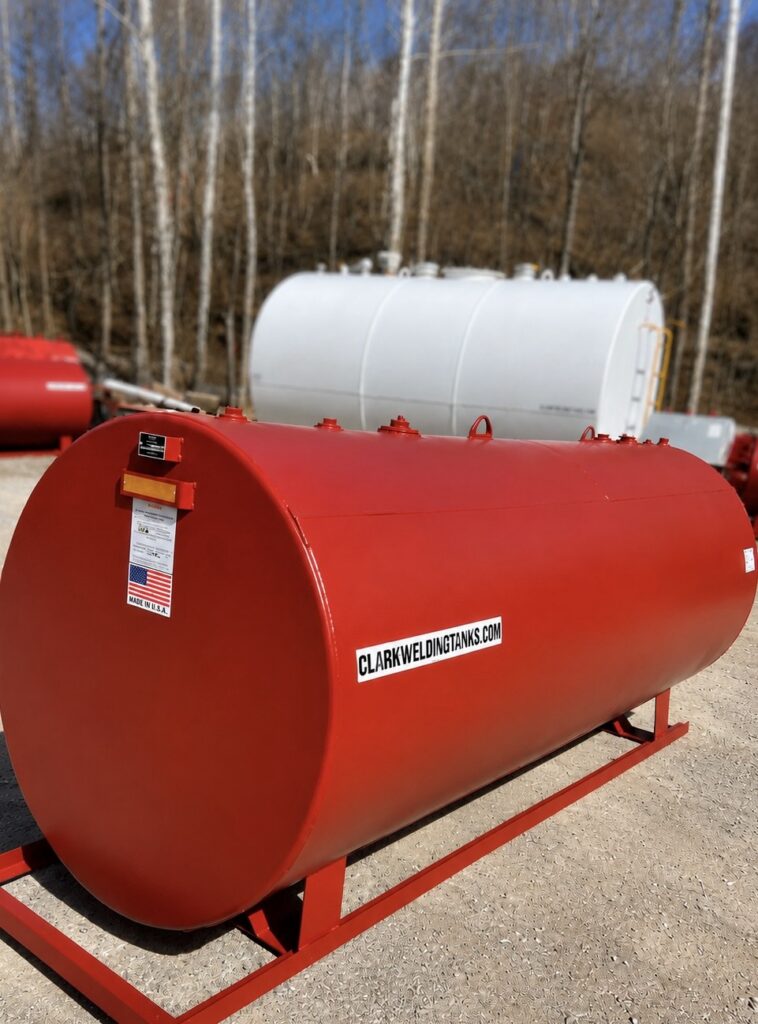
Horizontal tanks remain the most common choice because they offer a low center of gravity, easy access to fittings, and simple installation. Clark Welding Tanks builds standard 1,000-gallon horizontal tanks in two common footprints:
- 48-inch diameter × 10 feet 8 inches long
- 64-inch diameter × 6 feet long for locations where overall length is limited
The shorter 64-inch diameter model works well when the installation area has footprint restrictions but allows additional height.
Some projects benefit from a completely different design. Vertical tanks reduce the amount of ground space required while providing the same storage capacity. Rectangular tanks often solve space limitations inside equipment yards or industrial facilities where every square foot matters.
Generator installations sometimes call for a custom generator base fuel tank buyer’s guide design that supports the generator while storing fuel beneath it. These systems maximize available space and simplify the overall installation.
If your project has unique dimensions or equipment requirements, a custom-built tank may provide the best solution instead of trying to make a standard tank fit the application.
Build the Fueling System Around Your Operation
The tank itself is only one part of a complete fueling system. The accessories you choose can make daily fueling faster, safer, and easier.
Most systems include:
- Fill connection
- Venting
- Fuel level gauge
- Pump
- Hose and automatic nozzle
- Product labels
- Lockable equipment cabinet
Many customers also add equipment such as:
- Fuel filtration
- Digital or mechanical meters
- High-level alarms
- Overfill prevention equipment
- Remote tank monitoring
- Emergency shutoff controls
- Card or key access systems
The right combination depends on how your operation uses fuel.
A construction company fueling heavy equipment has different needs than a municipality fueling trucks every day. Likewise, a standby generator system has very different operating requirements than a fleet fueling island.
If you’re evaluating enclosed containment systems, our article about Self-contained above ground storage tanks explains another option that combines fuel storage and secondary containment into a single package.
Match the Equipment to the Fuel
Different fuels require different equipment.
Diesel systems often benefit from quality filtration and water management equipment that helps protect expensive engines and extends fuel quality during storage.
Gasoline systems require pumps, fittings, vents, and electrical equipment that are specifically designed and rated for gasoline service.
DEF (Diesel Exhaust Fluid) should never share equipment with petroleum fuels. DEF requires compatible materials and separate storage to prevent contamination.
If you’re unsure which tank design best fits your fuel, our guide to UL 142 fuel storage tanks explains the most common applications and construction options for aboveground fuel storage.
Choosing the correct equipment from the beginning helps reduce maintenance issues while protecting both your fuel investment and the equipment that depends on it.
Plan for Codes and Site Conditions
Installing a 1000 gallon fuel tank involves more than placing it on a concrete pad. The entire system should meet applicable fire codes, environmental regulations, manufacturer recommendations, and local permitting requirements.
Depending on your location, your project may involve the local fire marshal, building department, environmental agencies, your insurance carrier, or the property owner. Requirements can vary from one jurisdiction to another, so it’s always a good idea to confirm local rules before ordering a tank.
Your installation should also consider guidance from organizations such as:
- NFPA 30
- EPA 40 CFR Part 112 (SPCC), when applicable
- OSHA workplace safety requirements
- Local and state fire codes
These requirements can affect tank placement, venting, secondary containment, dispensing equipment, emergency access, and spill prevention.
Choose the Right Location
A good location makes fueling easier while improving safety and simplifying future maintenance.
When selecting a location, consider:
- Safe access for fuel delivery trucks
- Distance from buildings and property lines
- Nearby storm drains and waterways
- Vehicle traffic patterns
- Room to inspect and service the tank
- Space for future maintenance or expansion
The delivery truck also needs enough room to safely enter, unload fuel, and leave the property. A location that looks fine on paper may become difficult if a fuel truck cannot easily reach the fill connection.
The foundation matters just as much as the tank itself.
A 1,000-gallon steel tank weighs several tons when full, so it needs a stable, level foundation designed for the total operating weight. A properly prepared concrete pad helps prevent unnecessary stress on the tank while supporting safe operation for many years.
Sites with regular vehicle traffic may also need bollards or other impact protection to help prevent accidental damage.
Secondary Containment and Fire Protection
Secondary containment is one of the most important parts of any fuel storage system.
Many customers choose double-wall tanks because the outer wall provides built-in secondary containment. Depending on your location and the project requirements, this may satisfy containment requirements without constructing a separate containment area.
Some sites still require external containment or additional spill-control measures, so it’s important to verify local requirements before finalizing the design.
Projects with higher fire protection requirements may also require a protected tank instead of a standard double-wall tank.
For those applications, Clark Welding Tanks offers both STI Flameshield® tank and UL 2085 Fireguard® tank models.
Although both provide enhanced fire protection compared to a standard UL 142 tank, they use different construction methods and are designed for different project specifications. Our Flameshield® tank buyer’s guide and Fireguard® tank buyer’s guide explain the differences in more detail.
Choosing the correct tank from the beginning can help avoid redesigns, project delays, and unexpected costs later in the installation.
Keep Your Fuel System Running Safely
A well-built tank will provide years of dependable service, but routine inspections and good operating practices are just as important.
Assign trained employees to receive fuel deliveries, inspect the equipment, and monitor fuel levels. Fuel deliveries should never become a “fill it and forget it” task. Watching each delivery helps prevent overfills and allows problems to be caught before they become expensive repairs.
Regular inspections should include:
- Pumps and hoses
- Nozzles and fittings
- Fill caps and vents
- Fuel gauges
- Warning labels
- Signs of corrosion
- Leaks or stains around the tank
- Security locks and access points
Facilities located near the coast, in high-traffic areas, or in harsh weather may need more frequent inspections than lightly used installations.
Keeping records of inspections, maintenance, and repairs also helps protect your investment while making it easier to identify developing issues before they affect daily operations.
Work With a Manufacturer That Understands the Entire System
Choosing a 1000 gallon fuel tank isn’t just about selecting a storage vessel. The best projects consider the entire fueling system from the beginning, including delivery access, containment, dispensing equipment, maintenance, and long-term operation.
At Clark Welding Tanks, we build both standard and custom aboveground fuel storage tanks for commercial, industrial, agricultural, and municipal customers across the United States.
Whether you need a standard UL 142 above ground storage tank, a protected tank, a vertical tank, a rectangular tank, or a completely custom design, our team can help you choose equipment that fits your application.
We also offer pumps, gauges, vents, overfill protection, filtration, monitoring equipment, and other accessories that complete your fueling system.
Before requesting pricing, gather a few important details:
- Fuel type
- Estimated fuel consumption
- Preferred tank orientation
- Available installation space
- Dispensing equipment needed
- Jobsite location
- Known fire code or environmental requirements
The more information you can provide, the easier it is to recommend the right solution the first time.
If you’re ready to discuss your project, Contact Clark Welding Tanks or Request a fuel storage tank quote. We’ll help you build a fuel storage system that fits your operation today and continues to serve you for years to come.