Vertical Water Storage Tanks: A Practical Solution for Reliable Water Storage
Finding room for water storage is not always easy. As facilities grow, every square foot starts to matter. Equipment expands, traffic increases, and space that once seemed plentiful quickly fills up. When you need to store a large amount of water without using a wide footprint, a vertical water storage tank often makes the most sense.
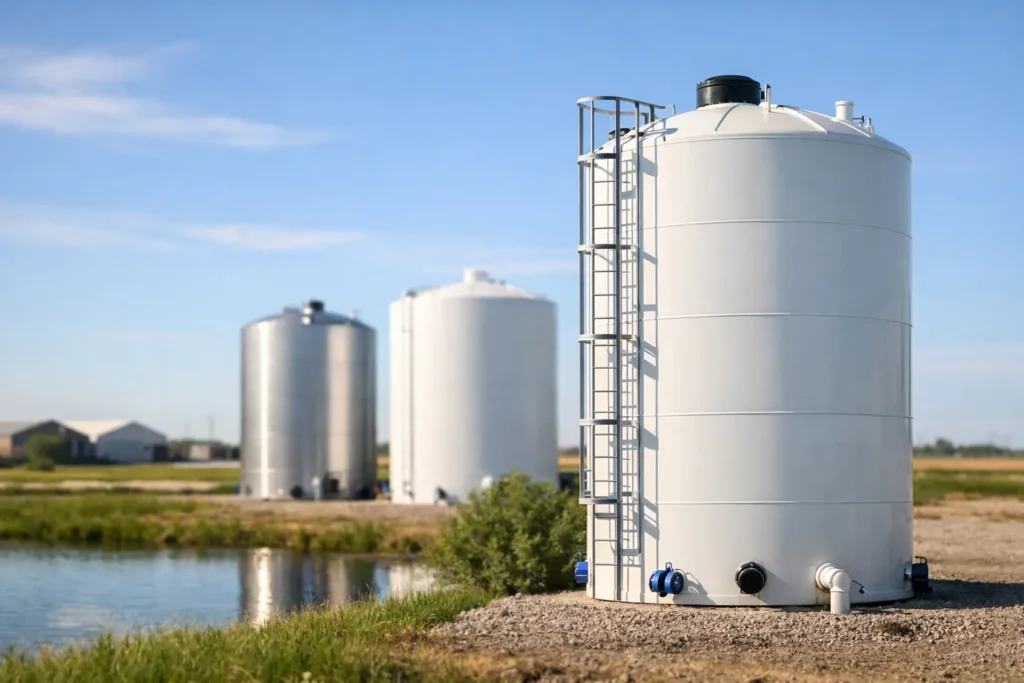
A vertical tank stores water upward instead of outward. That simple design helps save valuable space while still providing the capacity many commercial, industrial, agricultural, and municipal operations need every day.
Choosing a tank involves more than picking a gallon size. The type of water you plan to store, available space, site conditions, climate, maintenance needs, and future growth all play a role. Spending a little extra time planning now often leads to a tank that serves your operation well for many years.
If you’re still comparing storage options, our guide on choosing the right above ground fuel storage tank explains the same practical approach we recommend for every storage project. Start with how you plan to use the tank, then choose the design that fits those needs.
Why Choose a Vertical Water Storage Tank?
The biggest advantage is simple: you get more storage while using less ground space.
That makes vertical tanks a popular choice for facilities where equipment, buildings, traffic lanes, and loading areas already compete for room. Instead of spreading thousands of gallons across a large horizontal footprint, a vertical tank keeps most of that storage above the ground it occupies.
Many customers also appreciate the flexibility a vertical tank provides. It fits well beside existing buildings, inside fenced areas, near process equipment, or in locations where expanding outward would create problems.
Vertical tanks commonly support:
- Manufacturing facilities
- Farms and agricultural operations
- Construction sites
- Municipal maintenance departments
- Utility companies
- Mining operations
- Equipment wash stations
- Water treatment facilities
- Commercial properties
- Industrial processing plants
Every application has different requirements. Some customers need a simple storage tank for general water use. Others need a customized design with multiple nozzles, special coatings, level controls, or insulated construction.
That’s why it helps to look at the entire project instead of focusing only on tank capacity.
Common Uses for Vertical Water Storage Tanks
Water serves many different purposes, and every application places different demands on a storage tank.
Some facilities store clean water for equipment washing, pressure washing, or general maintenance. Others need water for irrigation, livestock, manufacturing processes, cooling systems, or construction projects. Municipal customers often use vertical tanks to support public works departments, parks, utility operations, or emergency preparedness.
Not every tank holds drinking water, either.
Many tanks store non-potable water, reclaimed water, process water, or water mixed with treatment chemicals. Those differences affect coating selection, outlet locations, maintenance access, and the overall tank design.
Understanding exactly how you’ll use the tank helps avoid costly changes later. It also helps your manufacturer recommend the right options before fabrication begins.
Choosing the Right Tank Size
One of the biggest questions buyers ask is, “How large of a tank do I need?”
The answer depends on how much water you use, how often you refill the tank, and how much reserve capacity you want to keep on hand.
A tank that’s too small may leave you scrambling during busy periods or unexpected delays. A tank that’s much larger than you need adds cost without providing much benefit. The goal is to choose a size that supports your operation today while leaving room for reasonable growth in the future.
Start by asking a few simple questions.
- How much water do you use each day?
- How often will the tank be refilled?
- Could weather or delivery delays interrupt your water supply?
- Will your operation expand over the next few years?
Answering those questions usually provides a much clearer picture than simply estimating gallons.
If you want to estimate storage needs, our tank calibration charts can help you better understand tank capacities and liquid levels.
It’s also smart to think beyond today’s needs. If you’re planning a facility expansion, adding equipment, increasing production, or growing your operation, choosing a slightly larger tank now may save money compared to replacing the entire system later.
Steel Construction Offers Long-Term Value
Steel remains one of the most popular materials for aboveground water storage because it combines strength, durability, and flexibility.
Unlike many off-the-shelf storage solutions, a fabricated steel tank can match your project instead of forcing your project to fit a standard design.
That flexibility allows manufacturers to customize:
- Tank height and diameter
- Inlet and outlet locations
- Overflow connections
- Manways
- Cleanout openings
- Level gauges
- Ladder locations
- Platforms
- Interior coatings
- Exterior paint systems
Every project has different priorities. Some customers focus on maximizing capacity in a limited space. Others want easier maintenance, specific piping connections, or compatibility with existing equipment.
A custom-built steel tank makes those adjustments much easier.
Protecting the Tank From Corrosion
Water may seem harmless, but over time it can become one of the biggest factors affecting the life of a storage tank.
The type of water matters.
Clean potable water creates different conditions than reclaimed water, process water, mineral-rich well water, or water containing treatment chemicals. Local climate also plays a role. High humidity, coastal environments, freezing temperatures, and constant sun exposure all affect long-term performance.
The right coating system helps protect both the inside and outside of the tank. Depending on the application, that may include specialized interior linings, industrial paint systems, insulation, or other protective features.
Choosing the proper corrosion protection at the beginning usually costs far less than repairing or replacing a tank years later.
Working with an experienced manufacturer such as Clark Welding Tanks helps ensure the tank fits both the application and the environment where it will operate.
Foundation and Site Planning Matter
A vertical water storage tank may have a smaller footprint than a horizontal tank, but it still places a tremendous amount of weight on the foundation.
Water weighs about 8.34 pounds per gallon. A 10,000-gallon tank can hold more than 83,000 pounds of water before you even add the weight of the steel tank itself. That’s why a solid foundation is one of the most important parts of the project.
Before installation, review:
- Soil conditions
- Foundation design
- Site drainage
- Frost depth, if applicable
- Delivery access
- Crane access, if needed
- Available space for piping and maintenance
Planning these details early helps the installation go more smoothly and reduces the chance of unexpected costs later.
It’s also important to leave enough working space around the tank. Your team should have easy access for inspections, cleaning, repairs, and future maintenance. Saving a few extra feet during installation can make routine service much easier for years to come.
Connections and Accessories
The tank itself is only one part of the system. The right fittings and accessories help the entire installation work safely and efficiently.
Depending on your application, you may want to include:
- Inlet and outlet connections
- Overflow piping
- Vent openings
- Manways
- Cleanout openings
- Sight gauges or level indicators
- Float switches
- Level sensors
- Sample ports
- Drain connections
Some operations benefit from simple manual gauges, while others use electronic monitoring that reports tank levels remotely. Choosing the right equipment depends on how often you monitor the tank and how important the stored water is to your daily operation.
If your area experiences freezing temperatures, insulation or heat tracing may also help protect the system during winter months.
Ladders and platforms deserve careful planning as well. Safe access makes inspections and maintenance much easier, while the right layout helps employees work more efficiently.
Planning for Long-Term Operation
A water storage tank is a long-term investment. Most owners expect it to serve their facility for many years, so it makes sense to think beyond the day it’s installed.
Ask yourself a few practical questions.
- Will water demand increase over time?
- Could additional equipment connect to the tank later?
- Will future expansion change piping or access?
- How will employees inspect and maintain the tank?
- Is replacement easy if the site changes?
Thinking through these questions now often prevents expensive modifications later.
Many customers also appreciate working with a manufacturer that offers custom fabrication. Instead of adjusting your facility to fit a standard tank, the tank can be built to fit your operation.
Our vertical storage tank page shows examples of custom steel tank configurations designed for different industries and applications.
Before You Order a Vertical Water Storage Tank
Before placing an order, take a little time to review the details of your project. A few conversations up front can save time, money, and frustration later.
Start by confirming:
- The amount of water you need to store
- The type of water the tank will hold
- Available space at the installation site
- Foundation readiness
- Delivery and unloading access
- Piping locations
- Power requirements for pumps or controls
- Whether insulation or freeze protection is needed
- Any local codes or customer specifications
It’s also helpful to decide who will handle each part of the project. Your tank manufacturer, contractor, electrician, plumber, and site team should all understand their responsibilities before fabrication begins. Good communication helps projects stay on schedule and reduces surprises during installation.
Why Work With Clark Welding Tanks?
Every storage project comes with its own challenges. One customer may need a simple water storage tank, while another needs custom nozzle locations, special coatings, additional access openings, or a tank designed around existing equipment.
At Clark Welding Tanks, we work with commercial, industrial, agricultural, and municipal customers across a wide range of industries. We build durable steel tanks and help customers choose options that fit their application instead of recommending the same solution for every project.
Whether you’re planning a new installation or replacing an existing tank, our team can answer questions, discuss your project, and help you select a storage solution that fits your operation.
You can contact Clark Welding Tanks to discuss your application or request a fuel storage tank quote when you’re ready to get started.
Final Thoughts
A vertical water storage tank offers an excellent way to store large volumes of water while using less ground space. When you choose the right size, plan for future growth, and select the right accessories, your tank can provide dependable service for many years.
The best projects begin with a clear understanding of how the tank will be used. Once you know your storage needs, site conditions, and long-term goals, choosing the right tank becomes much easier.
Taking the time to plan today helps create a storage system that supports your operation, protects your investment, and continues working long after installation is complete.