Chemical Storage Tanks That Fit the Job
Choosing a chemical storage tank involves more than picking the right size. The tank needs to match the chemical you’re storing, the way you’ll use it, your job site, and the regulations that apply to your project. A tank that looks right on paper can create problems later if it doesn’t fit the application.
For commercial, industrial, agricultural, and municipal facilities, the wrong tank can lead to corrosion, difficult maintenance, unnecessary downtime, environmental concerns, and expensive modifications. The right tank helps your operation run smoothly, protects your investment, and gives your team confidence every time they fill, inspect, or use the system.
At Clark Welding Tanks, we know every project is different. That’s why we take time to understand the application before recommending a storage solution. Our goal is to build a tank that fits the job instead of asking the job to fit the tank.
Every Chemical Storage Application Is Different
No two chemical storage projects are exactly alike.
A manufacturing plant may store cleaning chemicals for production. A municipality may need tanks for water treatment chemicals. Farms often store liquid fertilizers or crop protection products. Industrial facilities may use specialty chemicals that support their manufacturing process.
Even when two facilities store the same product, they may need completely different tank designs. One customer may fill the tank once a month while another fills it several times each week. One installation may sit indoors in a climate-controlled building, while another faces freezing winters or extreme summer heat.
The first question is simple.
What chemical are you storing?
The second question is just as important.
What concentration are you storing?
A stronger concentration of the same chemical may require a different design, coating, lining, or material. Temperature also matters. Some chemicals become thicker in cold weather, while others require insulation or heating to perform the way operators expect.
These details help determine everything from wall construction and fittings to vents, gauges, and accessories. Spending a little extra time planning now often prevents much larger problems later.
Choosing the Right Tank Design
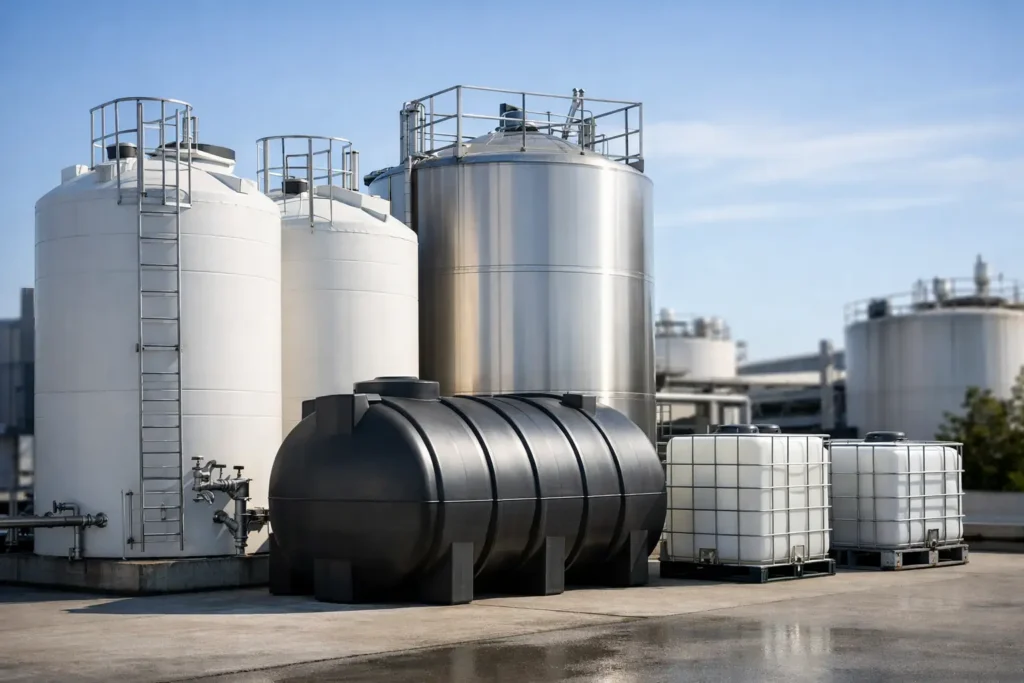
Steel remains a popular choice for many chemical storage applications because it offers strength, long service life, and plenty of flexibility for custom fabrication. A steel tank can often be built to fit the available space while adding the features your operation needs.
Depending on the application, a chemical storage tank may include custom nozzles, level gauges, ladders, platforms, insulation, heating systems, mixers, or specialized piping connections. Some projects also require interior coatings or linings that protect the tank from the stored chemical. The right solution depends on the product being stored and the conditions the tank will face every day.
Many buyers also choose aboveground storage because it makes inspections, maintenance, and leak detection much easier. Operators can quickly check the tank, monitor equipment, and perform routine service without many of the challenges that come with underground installations.
For facilities with limited space, a custom-built UL 142 above ground storage tank or a steel rectangular tank may provide a better fit than a standard tank. Custom fabrication also makes it easier to match existing piping, equipment, and site layouts without forcing major changes to the rest of the system.
Think Beyond the Tank
A successful chemical storage system includes much more than the tank itself.
Think about how the tank will be filled. How will operators monitor product levels? How will they remove the chemical? What happens if the tank reaches capacity? How will routine inspections take place?
These questions help shape the entire design.
Features like overfill protection, level gauges, vents, valves, access hatches, and proper piping all make a difference in day-to-day operation. A system that works well is usually easier to maintain, easier to inspect, and easier for employees to use safely.
If your operation may grow in the future, that is worth discussing during the planning stage. Building with future expansion in mind can save both time and money later. The goal is to choose a storage system that works well today while leaving room for tomorrow.
Containment and Compliance Matter
Chemical storage projects often involve more than selecting a tank. They also require planning for containment, safety, inspections, and environmental protection.
Some facilities choose integrated containment systems because they save space and create a compact installation. Others prefer external containment that fits their site layout or operating practices. The best choice depends on the chemical being stored, available space, site conditions, and how the facility plans to monitor the system.
If you’re comparing containment options, our guide to self-contained above ground storage tanks explains how integrated containment works and where it may fit certain applications.
Compliance should also become part of the conversation early in the project. Requirements vary depending on the chemical, the location, and how the tank will be used. Some projects may involve EPA, OSHA, NFPA, local fire officials, or other regulatory agencies.
Instead of waiting until permitting or delivery, ask these questions during the planning stage. It’s much easier to include the right vents, gauges, access points, grounding, overfill protection, and other features during fabrication than it is to add them after the tank arrives.
Working with an experienced manufacturer also helps identify potential issues before construction begins. That saves time, reduces surprises, and helps keep the project moving.
Common Mistakes Buyers Can Avoid
One of the biggest mistakes buyers make is choosing a tank based only on price. Cost always matters, but the lowest price isn’t always the best value. A tank that doesn’t match the application can lead to modifications, maintenance issues, or a shorter service life.
Another common mistake is assuming every chemical behaves the same way. Small differences in concentration, temperature, or operating conditions can change the design requirements.
It also helps to think about the entire storage system instead of focusing only on the tank. Pumps, valves, gauges, vents, overfill protection, and other accessories all play an important role in how the system performs. Planning these details from the beginning usually creates a safer, more efficient installation.
If you’re still comparing storage options, our article on choosing the right above ground fuel storage tank walks through many of the same planning questions that apply to custom storage projects.
Work With a Manufacturer That Understands Your Application
The best chemical storage projects begin with a conversation.
When your tank manufacturer understands what you’re storing, how your operation works, and what your site requires, they can recommend a storage solution that fits your application instead of trying to make a standard tank work for every project.
At Clark Welding Tanks, we work with commercial, industrial, agricultural, and municipal customers across a wide range of industries. Every project starts by learning about the chemical, the operating conditions, the available space, and any project requirements that affect the final design. That approach helps us build tanks that are practical, durable, and built for real-world use.
Whether your project calls for a standard aboveground storage tank or a fully customized design with specialized fittings and accessories, planning ahead almost always leads to a better result. A well-designed system helps protect your employees, your equipment, your product, and your investment for years to come.
If you’re planning a new installation or replacing an existing chemical storage tank, contact Clark Welding Tanks to discuss your project. If you’re ready to get started, you can also request a fuel storage tank quote. We’ll help you find a storage solution that fits your operation and supports your long-term goals.