Waste Oil Tanks Keep Your Shop Cleaner, Safer, and Better Organized
Commercial waste oil tanks usually become a priority after something almost goes wrong. Maybe used oil has started piling up in drums behind the shop. Maybe your fleet has outgrown temporary containers. Maybe an inspector asks questions about storage, labeling, secondary containment, or fire protection.
By that point, the conversation is about much more than housekeeping. It is about protecting your employees, reducing environmental risks, staying compliant, and keeping your operation running smoothly.
Whether you operate a maintenance shop, fleet yard, farm, manufacturing facility, public works department, or another business in the Industries we serve, a properly designed waste oil tank helps you collect, store, and manage used oil safely until it is recycled or removed.
The right system creates a cleaner work area, reduces spill risks, and makes daily maintenance easier. The wrong setup often leads to unnecessary cleanup, wasted labor, and expensive headaches.
At Clark Welding Tanks, we believe every storage system should match the way you actually work. Choosing the right waste oil tank starts with understanding your operation instead of simply picking a gallon capacity.
What Does a Waste Oil Tank Need to Do?
At first glance, a waste oil tank seems simple. Its job is to hold used oil until a recycling company or waste oil hauler collects it.
In reality, a good waste oil storage system does much more than that.
The tank needs to match the type of waste oil you generate, the amount you produce, how employees transfer oil into the tank, and the conditions around your facility. A tank that works well for an automotive repair shop may not be the best choice for a heavy equipment contractor, a municipality, or a manufacturing plant.
Many facilities collect more than one type of used petroleum product. Engine oil, hydraulic oil, transmission fluid, gear oil, and other lubricants often end up in the same storage system. Some waste oil also contains small amounts of water or sediment from normal operation.
Those differences affect how the oil flows, how often the tank needs cleaning, and which accessories make everyday use easier. A waste oil tank should fit your operation instead of forcing your employees to work around the equipment.
Think About How Oil Reaches the Tank
One of the most overlooked parts of a waste oil project is the collection process itself.
Some facilities drain oil directly from service bays. Others pump used oil from portable carts. Larger operations may collect waste oil from several locations before transferring it into one central storage tank.
That process influences where fill connections belong, how high the tank should sit, what fittings work best, and how operators safely access the equipment.
A tank that looks good on paper quickly becomes frustrating if hoses are difficult to connect, fill points sit too high, or cleanout openings make maintenance harder than it needs to be.
Planning around your daily workflow usually produces a safer, cleaner, and more efficient installation.
How to Choose the Right Waste Oil Tank Size
One of the first questions buyers ask is, “How many gallons do I need?”
That is an important question, but it is only part of the answer.
A tank that is too small fills quickly and increases the chance of overflows or emergency pickups. A tank that is much larger than necessary takes up valuable space and increases project costs without providing much benefit.
The better approach starts with understanding how much waste oil your operation generates during its busiest periods.
Think about seasonal equipment maintenance, fleet service schedules, harvest seasons, generator maintenance, or other times when waste oil production increases. Then consider how often your recycling company collects used oil.
Your tank should comfortably handle those busy periods without forcing employees to rush or find temporary storage.
If you are evaluating different storage options, our guide on Choosing the right above ground fuel storage tank explains many of the same planning steps that apply to waste oil storage projects.
Why Steel Waste Oil Tanks Are a Popular Choice
For most commercial and industrial applications, a steel waste oil tank offers the durability and long service life buyers expect. Steel stands up well to demanding environments and supports a wide range of accessories that improve safety and day-to-day operation.
Many waste oil tanks are built to UL 142 standards, making them a popular choice for above ground liquid storage. If you are unfamiliar with the standard, our UL 142 fuel storage tanks buyer’s guide explains how UL 142 tanks are built and where they are commonly used.
A UL 142 above ground storage tank can include features such as:
- Level gauges
- Lockable fill connections
- Overfill prevention equipment
- Pump packages
- Heating systems
- Ladders and platforms
- Custom nozzles and fittings
- Inspection openings for easier maintenance
These features help create a storage system that works with your operation instead of creating extra work for your employees.
Not every waste oil tank needs the same design. A small repair shop has different needs than a fleet maintenance facility or a large industrial plant. That is why it helps to choose a manufacturer who asks questions before recommending a tank.
Single Wall, Double Wall, or Self-Contained?
Secondary containment is another important decision during the planning process.
Some facilities install a single wall tank inside a separate containment area. Others prefer a double wall tank with built-in secondary containment. In some applications, a Self-contained above ground storage tank offers an excellent solution by combining the storage tank and secondary containment into one complete package.
The right choice depends on your facility, your local requirements, your available space, and how you plan to use the tank.
Planning for containment early often makes installation easier and helps simplify long-term maintenance.
Waste Oil Tank Codes and Compliance
Buying a waste oil tank involves more than selecting a tank size.
Every installation should support safe operation while meeting the codes and regulations that apply to your facility.
Depending on your application, that may include industry standards, environmental regulations, fire codes, insurance requirements, and local building or fire officials.
A few of the most common resources include:
- NFPA 30 for flammable and combustible liquid storage.
- EPA 40 CFR Part 112 for Spill Prevention, Control, and Countermeasure (SPCC) requirements.
- Guidance from the Steel Tank Institute (STI) for above ground steel tanks.
Every project is different. A municipality, equipment dealer, farm, manufacturing plant, and commercial fleet may all have different requirements.
That is why planning should include more than the tank itself.
Think about questions such as:
- Will the tank sit indoors or outdoors?
- How will employees transfer waste oil into the tank?
- Is secondary containment required?
- Does the site need bollards or vehicle protection?
- Will winter temperatures require heat tracing or insulation?
- Does the installation need spill control equipment or overfill protection?
Answering those questions early usually saves time, reduces unexpected costs, and helps create a smoother installation.
Waste Oil Tank Features That Make Daily Work Easier
A waste oil tank should make daily work easier, not create extra steps for your employees.
The small details often make the biggest difference after the tank is installed.
For example, fill connections should be easy to reach and sized for the way your team transfers used oil. A fill point in the wrong location can make hose routing awkward and increase the chance of spills.
A reliable level gauge is another feature worth considering. When operators can quickly see how much capacity remains, they can schedule pickups before the tank becomes full and avoid unnecessary overfill risks.
Inspection and cleanout access also deserve attention. Used oil often contains sludge, dirt, and small amounts of water. A tank with a properly sized manway makes inspections, cleaning, and routine maintenance much easier over the life of the tank.
Some facilities also benefit from:
- Lockable fill caps
- Pump packages
- Filtration equipment
- Custom nozzle layouts
- Heating systems
- Insulation for colder climates
- Overflow prevention equipment
These options may seem like small upgrades during the quoting process, but they often improve safety, reduce maintenance time, and make everyday operation much more efficient.
When a Custom Waste Oil Tank Makes Sense
Many waste oil storage projects work well with a standard tank. Others benefit from a custom design.
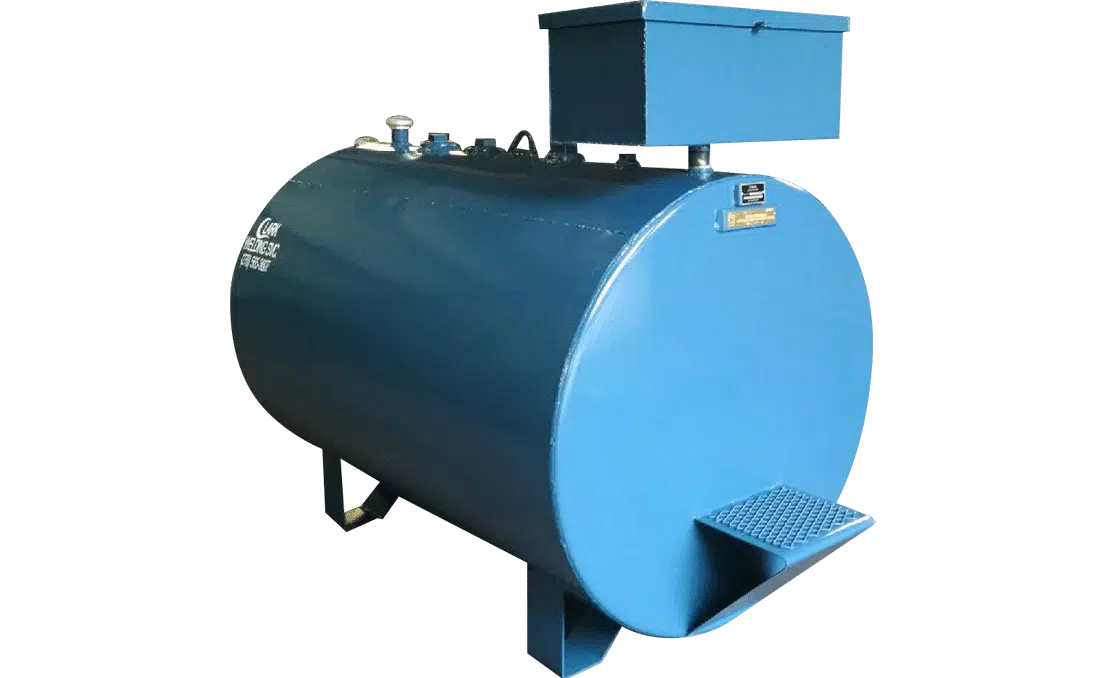
Every facility has its own space limitations, maintenance procedures, and collection methods. A standard tank may fit the available space, while another project calls for different dimensions, additional fittings, or specialized equipment.
A custom waste oil tank might include:
- Horizontal or vertical construction
- Custom lengths or diameters
- Additional nozzles
- Larger inspection openings
- Pump and filtration packages
- Heating systems
- Ladders and platforms
- Custom supports or saddles
The goal is not to make the tank more complicated. The goal is to make it fit your operation.
A tank that fits your existing layout usually costs less to install than one that requires field modifications after delivery.
Working with an experienced manufacturer also helps identify potential issues before fabrication begins. Simple changes during the design stage often save significant time and money during installation.
At Clark Welding Tanks, we believe every project starts with the right questions. Understanding how your team collects, stores, and removes waste oil helps us recommend a solution that fits your operation today and continues serving you well for years to come.
How to Choose a Waste Oil Tank Manufacturer
Price is always an important part of any purchase, but it should never be the only factor.
A waste oil tank supports employee safety, environmental protection, and daily operations. A lower-priced tank that lacks the right fittings, documentation, or support can quickly become the more expensive option.
Ask potential manufacturers questions such as:
- Is the tank designed for my application?
- Does it meet the appropriate industry standards?
- Can fittings and nozzles be customized?
- What secondary containment options are available?
- Can heating or insulation be added if needed?
- What support is available during the design process?
- What happens if site conditions change before installation?
Experienced manufacturers usually ask just as many questions as their customers. That conversation helps ensure the finished tank fits the project instead of requiring costly changes after it arrives.
The Right Waste Oil Tank Supports Your Entire Operation
A waste oil tank does much more than store used oil.
It helps keep your shop cleaner, protects employees, reduces spill risks, supports environmental compliance, and makes daily maintenance more efficient. When the tank matches your operation, employees naturally follow safer and more organized work practices.
Taking a little extra time during the planning stage often leads to years of reliable service. Choosing the right size, selecting the right features, and planning for safe access all contribute to a better installation.
If you’re planning a new waste oil storage system or replacing an older tank, start by evaluating how your facility collects, transfers, and stores used oil. A tank designed around your operation will deliver better long-term value than one selected by price alone.
Whether you need a standard design or a custom-built solution, Contact Clark Welding Tanks to discuss your project. When you’re ready, you can also Request a fuel storage tank quote and our team will help you find the right solution for your application.
Frequently Asked Questions About Waste Oil Tanks
What size waste oil tank do I need?
The right size depends on how much waste oil your operation generates between scheduled pickups. Consider your busiest maintenance periods, seasonal demand, and your oil recycling schedule instead of focusing only on average monthly volume.
Do waste oil tanks require secondary containment?
Many installations include secondary containment to help protect the environment and meet site requirements. Depending on your application, that may involve a double wall tank, a separate containment system, or a Self-contained above ground storage tank.
Can I store different types of used oil in the same tank?
Many facilities collect used engine oil, hydraulic oil, transmission fluid, and gear oil in the same waste oil tank. Before mixing products, always verify that your recycling company accepts the combined waste stream and follow any local regulations that apply to your operation.
Are waste oil tanks built to UL 142 standards?
Many above ground steel waste oil tanks use UL 142 construction. If you would like to learn more about this standard, read our UL 142 fuel storage tanks buyer’s guide.
What features should I look for in a waste oil tank?
Popular features include level gauges, lockable fill caps, inspection manways, pump packages, heating systems, overfill prevention equipment, and custom nozzle layouts. The best combination depends on your facility, your collection process, and how your employees use the tank every day.
Learn More About Above Ground Storage Tanks
If you’re comparing different types of storage tanks, these resources can help: