When backup power fails, the problem is rarely the generator alone. In many facilities, the generator base fuel tank determines how long the system can run, how safely it operates, and whether the installation meets code from day one.
For hospitals, data centers, water systems, telecom sites, municipal buildings, and industrial plants, that makes tank selection a design decision – not an accessory purchase. The right base tank has to support the generator set, provide usable run time, fit the footprint, integrate with controls, and satisfy safety and compliance requirements without creating service headaches later.
What a generator base fuel tank does
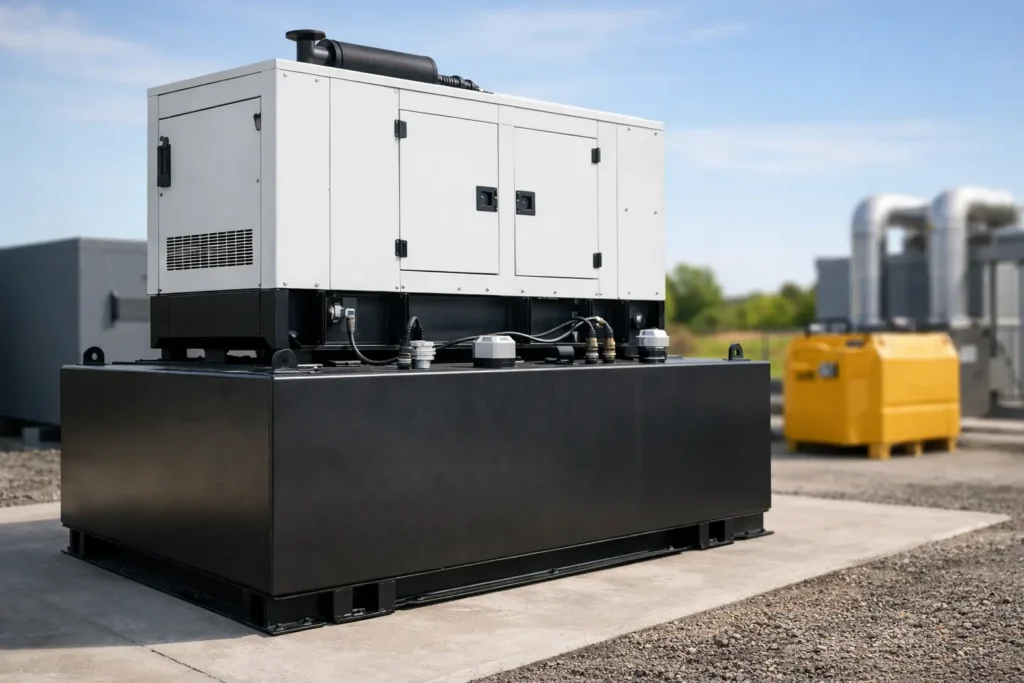
A generator base fuel tank is a sub-base tank designed to sit beneath the generator enclosure or skid. It serves two jobs at once. Structurally, it supports the generator package. Operationally, it stores the diesel or other approved fuel needed for standby or prime power operation.
That combined role is what makes these tanks different from a standard aboveground storage tank placed nearby. Space is tighter, weight distribution matters more, and the tank has to work with the generator manufacturer’s design requirements for vibration, mounting, fuel supply, return lines, vents, and controls. In many projects, the tank must also coordinate with remote fill piping, leak monitoring, overfill protection, and emergency shutdown provisions.
A base tank can be a practical solution when site space is limited or when a compact, integrated package helps speed installation. But it is not automatically the best fit for every project. Larger run-time requirements, strict local fire code conditions, or difficult maintenance access may point to a separate main tank with a day tank or sub-base arrangement instead.
How to size a generator base fuel tank
Capacity is usually the first question, but the right answer depends on more than generator horsepower. Buyers often start with target run time – eight hours, 24 hours, 48 hours, or longer – then compare that against the generator’s fuel consumption at different load levels.
That sounds simple until real-world limits enter the picture. Not every gallon in the tank is usable. Tanks need reserve space, room for thermal expansion, and proper pickup placement. If the generator returns warm fuel to the tank, temperature can also affect how the system performs over time. A tank advertised at one total capacity may offer a lower usable operating volume.
Weight is another factor that gets overlooked. A full steel base tank carrying hundreds or thousands of gallons adds substantial load below the genset. The support frame, pad, anchors, and lifting plan all need to reflect that combined weight. For rooftop, mezzanine, or elevated equipment installations, structural review becomes especially important.
This is where experienced engineering support matters. The goal is not just to maximize gallons. It is to provide enough practical run time while keeping the package serviceable, code compliant, and compatible with the generator manufacturer’s requirements.
Generator base fuel tank design considerations
A well-built generator base fuel tank needs more than shell steel and a fill opening. The details determine whether the system performs reliably under actual operating conditions.
Single wall vs. double wall construction
For many commercial and industrial applications, double wall construction is preferred because it provides built-in secondary containment. That can help simplify site planning and support environmental protection goals, especially where fuel leaks would create operational or regulatory risk. In some jurisdictions or applications, containment approach and tank listing requirements should be confirmed early with the authority having jurisdiction.
UL listing and code alignment
Listings matter because buyers are not just purchasing fabricated steel. They are purchasing a tank intended to satisfy recognized safety standards. Depending on the application, UL 142 or other applicable standards may shape the tank design. Generator installations may also need to align with NFPA requirements, local fire code, EPA considerations, and site-specific insurance standards.
A tank that looks adequate on paper can still create delays if documentation, labeling, or accessories do not match project requirements. That is why submittal review should cover the full package, not just capacity and dimensions.
Openings, fittings, and accessories
A base tank typically requires coordinated openings for supply, return, venting, emergency venting where required, fill, level indication, leak detection, and drain provisions. Some projects also call for rupture basins, fuel alarms, overfill prevention, anti-siphon protection, and control integration with the generator package.
These are not add-ons to figure out after fabrication. They should be part of the design process so the finished unit works with both the generator and the site fuel handling plan.
Installation and site conditions matter
The best tank on a drawing can still become a field problem if installation details are not addressed early. Delivery clearance, crane access, housekeeping pads, bollard protection, remote fill locations, and maintenance access all affect how practical the final setup will be.
Cold weather applications may need insulated or heated features depending on fuel type and climate. Hot environments may require attention to fuel expansion and venting. Coastal or corrosive industrial sites may need upgraded coatings or stainless components in select areas. If the unit will serve a critical facility, redundancy in alarms and monitoring may be worth the added upfront cost.
Noise enclosure design can also affect serviceability. If technicians cannot safely access the level gauge, fittings, or leak monitor without removing major components, routine maintenance becomes harder than it should be. That tends to show up later as missed inspections and avoidable downtime.
Common mistakes buyers make
The most common mistake is treating the generator base fuel tank as a commodity. Two tanks with similar dimensions can differ significantly in steel thickness, containment design, listing, accessory quality, and code readiness.
Another issue is underestimating run-time assumptions. A facility may specify an eight-hour tank based on expected load, then discover actual emergency operation consumes more fuel because of building conditions, ambient temperature, or changing equipment demand. It is usually better to size from realistic operating scenarios than from idealized numbers.
Buyers also run into trouble when they separate procurement decisions that should stay connected. If the generator vendor, tank fabricator, installing contractor, and controls provider are all working from different assumptions, mismatches appear in the field. Fill locations end up awkward, vent sizing gets questioned, alarm points do not match controls, or clearances interfere with startup.
Good coordination reduces those risks. It also shortens approval and commissioning time.
When a base tank is the right choice
A generator base fuel tank is often the right fit when the project needs a compact footprint, integrated packaging, and moderate run time directly under the genset. This is common for commercial facilities, municipal sites, utility support locations, and industrial backup systems where space efficiency matters.
It may be less ideal when very long run times are required or when site conditions make fueling, inspection, or future expansion difficult. In those cases, a separate UL listed storage tank feeding a day tank or generator supply system may offer more flexibility. The better option depends on footprint, code conditions, refill logistics, and operational criticality.
That is why specification review should start with application needs rather than a default tank style. The tank has to fit the mission as much as the equipment.
What to ask before you buy a generator base fuel tank
Before approving fabrication, buyers should confirm the required run time, fuel type, usable capacity, tank listing, wall construction, accessory package, and installation conditions. It is also smart to verify who is responsible for each interface point – generator manufacturer, tank manufacturer, electrical contractor, mechanical installer, and fuel system contractor.
For critical applications, ask how the tank design addresses leak detection, overfill prevention, maintenance access, and field testing. If the project has jurisdictional review, confirm what documentation will be needed for approval. Those conversations are easier before steel is cut.
Manufacturers with practical field experience can help identify issues that do not always appear in bid documents. Clark Welding Tanks works with buyers across commercial, municipal, industrial, agricultural, utility, and energy markets to build code-conscious tank systems that match real operating requirements, not just catalog assumptions.
A generator package is only as dependable as the fuel system supporting it. Choosing the right base tank means thinking past capacity alone and focusing on safety, compliance, serviceability, and the kind of performance your facility will need when the power goes out.